
10 Lusha Alternatives, Compared on Credit Mechanics
Julien K.Published Updated

Key takeaways:
- Lusha prices per data point rather than per contact, and says so: "Each data point has a separate credit cost." An email costs 1 credit and a phone number 5, which works out near $0.09 to $0.12 an email and $0.44 to $0.62 a phone, depending on plan and billing basis.
- Its API bills a minimum of one credit per request "even if no results are found". Six of the ten here charge nothing at all for a miss, and we are not one of the six: a live lookup that finds nothing still costs us 2 credits.
- Annual credits are the trap. Lusha's own documentation is blunt about it: a yearly allowance is forfeited at the end of the term, renewal or no renewal.
- Phone numbers cost multiples of emails almost everywhere, including with us at 20 credits. That is a pricing signal about how hard the data is, not an upsell.
Lusha is a good product doing an unfashionable job well: a rep opens a company page, clicks, and gets a contact. Its free tier is genuine, its prices are published, and its API reaches every plan.
Teams start shopping for Lusha alternatives, or for anything similar to Lusha at a steadier price, when the invoice stops matching the work. Usually nothing has gone wrong with the data. What has happened is that the credit arithmetic, which looked trivial at 40 free credits a month, turned into a budget line nobody can forecast. One recruiter-side comparison of SignalHire alternatives runs into exactly the same wall from the other direction.
This guide compares ten tools similar to Lusha on credit mechanics specifically: what one credit buys, what a phone costs against an email, whether a miss is billed, and whether unused credits survive the month. Reverse Contact is ours, so it goes first, and our least flattering number sits in the table with everybody else's. Everything quoted here came off the vendors' own pricing pages, documentation and terms during October 2026.
Why Teams Outgrow Lusha
Lusha publishes more about its own billing than most of this market, which makes the friction points easy to name without resorting to opinion.
Credits are priced per data point, not per person. Lusha's documentation states that each data point carries its own credit cost, and that those costs "vary depending on your specific plan". Revealing a contact's email and phone together can run to six credits. A buyer who budgeted "one credit per contact" is out by a factor of six before anyone has done anything wrong.
An empty API call still costs. Lusha's developer docs set "a minimum cost of 1 credit per API request, even if no results are found". In the web app a lookup that finds nothing is free, so the rule only bites once you automate, which is precisely when volume climbs.
A partial match still costs. Lusha bills per field returned, so a contact where you wanted an email and a phone but got only the email still spends the email credit. Rows it cannot match at all are free, which not every vendor offers, but a half-filled record is billed for whatever came back.
Annual credits do not roll over. This is the sharpest one. Lusha's plan documentation states that yearly credits "do not roll over under any circumstances" and are forfeited even if the subscription renews. Monthly plans on the middle and upper tiers can bank up to twice the allowance; Free and Starter cannot bank anything.
A thread on r/DigitalMarketing captures the pattern from the user side, where one poster described Lusha working well for two months before the hit rate dropped off for their list, with another replying that they could not get numbers for half their leads.
That is anecdote rather than measurement, and coverage always varies by segment. It still points at the real cost question: credits are spent on attempts, so your hit rate decides what a usable record costs.
Worth saying plainly: none of this makes Lusha expensive. It makes Lusha hard to forecast, and those are different complaints with different fixes. Most Lusha alternatives and Lusha competitors alike win on predictability rather than on rate. Anyone weighing a move to a flat B2B contact database is usually buying predictability rather than a lower rate.
What One Credit Actually Buys
Comparing headline prices across this category is close to meaningless, because the unit behind the price changes from vendor to vendor. The table below puts the mechanics side by side.
| Vendor | What one credit buys | Email / phone cost | Is a miss charged? | Do credits roll over? |
|---|---|---|---|---|
| Reverse Contact | A cached lookup or one search result | 3 / 20 credits | No on email, phone, search and cached lookups; 2 credits on a live miss | Packs last 3 months from purchase, oldest spent first |
| Lusha | One data point, priced per type | 1 / 5 credits | Free in the app; 1 credit minimum on an API call | Monthly only, up to 2x, on Pro and Premium |
| Apollo.io | One email; phones cost more | 1 / 8 credits | Charged only when an email verifies | No, they expire each billing cycle |
| ZoomInfo | One profile export | Not published | Not published | Not published |
| Cognism | One revealed contact | Same credit either way | Not published | Not published |
| UpLead | One contact, email and mobile together | Bundled | Only on a Valid Only export | Not published |
| RocketReach | One lookup, all contact details on a profile | Bundled | No, the lookup is refunded | Monthly refreshes; annual allowances expire |
| Findymail | One email | 1 / 10 credits | No | Up to 2x the plan allowance |
| LeadMagic | One email; validation costs a quarter | 1 / 5 credits | No, failed lookups are free | Monthly banks to 2x; annual does not |
| FullEnrich | One work email | 1 / 10 credits | No | 3 months on monthly, 12 on yearly |
| Datagma | One verified email | 1 / 30 credits | No | Up to 12 months |
Three patterns fall out of that table, and all three matter more than the sticker price.
Phones cost a multiple of an email almost everywhere. Datagma charges 30 credits for a mobile, we charge 20 against 3 for an email, Findymail and FullEnrich 10, Apollo 8, Lusha and LeadMagic 5.
Cognism, UpLead and RocketReach are the exceptions, charging the same either way or bundling both into one unit. Nobody is being greedy. Mobile numbers are harder to source and harder to verify, and a vendor charging the same for both is usually bundling the cost rather than removing it, which our phone number enrichment pricing states openly rather than hiding in an average.
Misses are where the models genuinely diverge. Six vendors here charge nothing when a lookup finds nothing. Lusha charges a credit per API request regardless, Apollo bills only on a verified email, and ZoomInfo and Cognism do not publish a rule at all. On a list with a 60% hit rate, that difference changes the real cost per usable record by two thirds.
Expiry is the quietest of the three and the most expensive. Apollo's credits die at the end of each billing cycle. Lusha's annual allowance is forfeited at the end of the year. Datagma carries credits up to twelve months, FullEnrich three or twelve depending on billing, and ours last three months from each purchase with the oldest spent first.
The 10 Best Lusha Alternatives
The table below is the buying view: what each tool is for, what it costs to start, and the one credit rule most likely to surprise you.
| Tool | Best for | Pricing (from) | Free option | The rule to know |
|---|---|---|---|---|
| Reverse Contact | Pipelines, not browser tabs | Credit packs from $100 | Trial credits, no card | Live lookups that miss cost 2 credits |
| Apollo.io | Data and outreach in one seat | $49/seat/mo billed annually | 900 credits a seat a year | Credits expire every billing cycle |
| ZoomInfo | Enterprise coverage | Quote only | ZoomInfo Lite | One credit per export, including API calls |
| Cognism | European mobile numbers | Quote only | None published | Sold in packages of five seats |
| UpLead | A written accuracy guarantee | $74/mo billed annually | 7-day trial, 5 credits | Essentials and Plus are single-user |
| RocketReach | Lookups refunded when they fail | $33/mo billed annually | 5 lookups, no card | Annual plans cap exports, not lookups |
| Findymail | Bounce-rate guarantees | $49/mo for 1,000 credits | No free plan | Its default view now shows seat plans |
| LeadMagic | Success-only billing | $83/mo billed yearly | None | Team access adds $49 a seat |
| FullEnrich | Waterfall enrichment, unlimited users | $26/mo billed annually | 50 trial credits | A mobile costs ten times an email |
| Datagma | European email work, month to month | $39/mo billed annually | 100 credits a month | A mobile costs thirty credits |
Our own entry leads because we own it, not because it won anything. Everything after it runs from the broadest platforms down to the specialist finders. A similar spread shows up among Hunter.io alternatives, where the unit of sale varies more than the coverage does.
1. Reverse Contact
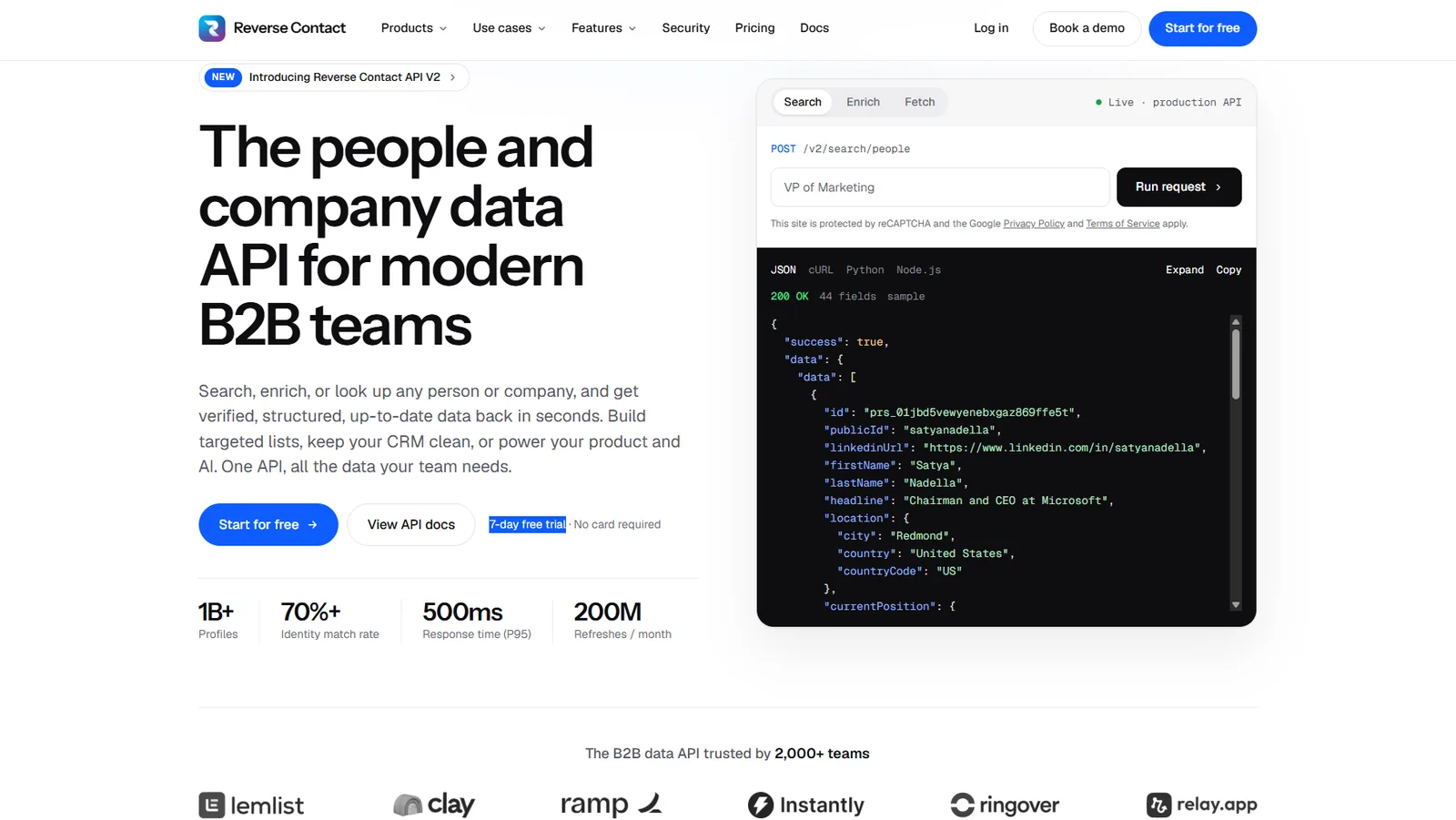
Best for: Pipelines, not browser tabs.
Overview: Of the apps like Lusha gathered here, this is the one with no interface at all. Reverse Contact is an API, not something a rep opens. No extension, no prospecting dashboard, no seats on the invoice. Your application asks for a person or a company and receives a structured profile.
On credits, the rules are deliberately boring. A cached lookup or a single search result costs one credit, a live fetch or an enrichment costs two, an email that is found costs three, and a lookup returning a phone number costs twenty.
Searches, cached lookups, and email or phone lookups that find nothing cost nothing. The one exception is a live fetch or live enrichment returning a 404, billed two credits because the work was done.
That matters most where search is the main call. A single well-formed request returns a page of matching profiles and every one of them is a credit. On that shape the question is not what a credit costs but how many profiles you have to look at before you find the right one. Our coverage report shows why the filters matter: in the October 2026 snapshot, individual contributors made up 54% of quality profiles and CXOs 1.7%, so a search left open on seniority mostly returns people below the buyer.
Key features:
- Four entry points: an email, a person's name plus their employer's domain, a company name, or filters across 30+ criteria.
- A free count of how many profiles match before any credits are spent.
- A free
/checkcall returning a record's last full refresh date. - Contact data billed on results through the email finder API, with nothing charged on a miss.
- A cached read returns in about half a second; a live retrieval runs as a background job and arrives by webhook.
- One response shape across REST, webhooks, CSV and MCP.
Pricing: Credit packs start at $100 with nothing recurring, and each pack lasts three months from its purchase date, oldest spent first. Monthly plans at $249, $449 and $699 remove the meter from profile lookups, then search, then enrichment, though live re-fetches, emails and phones always draw credits. All three license the data for your own team; showing it to your customers needs a Platform agreement, priced on application.
Pros: No seats anywhere in the model, misses free on most call types, free match counts and freshness checks, one schema across every delivery method
Cons: Nothing for a rep to click, so this replaces Lusha's data and not its workflow; a phone lookup costs 20 credits; a live lookup that misses still costs 2; each pack expires three months after purchase, shorter than Datagma's twelve months or FullEnrich's yearly rollover
How to start using it:
- Create an account; trial credits arrive without a card.
- Push 200 genuine rows through and note the hit rate, not the spend.
- Divide credits consumed by usable records returned. That figure, not the pack price, is your actual cost.
- Compare it against the same list run through your current tool.
- If customers will see the data, raise Platform with us before building.
Why it's a good Lusha alternative: The unit is a call rather than a seat, the rate is published per call type, and most ways of finding nothing cost nothing. What you lose is the click-to-reveal habit Lusha is built around.
Final verdict: Right when the data feeds software and the volume is real. Wrong if a rep needs somewhere to work.
2. Apollo.io
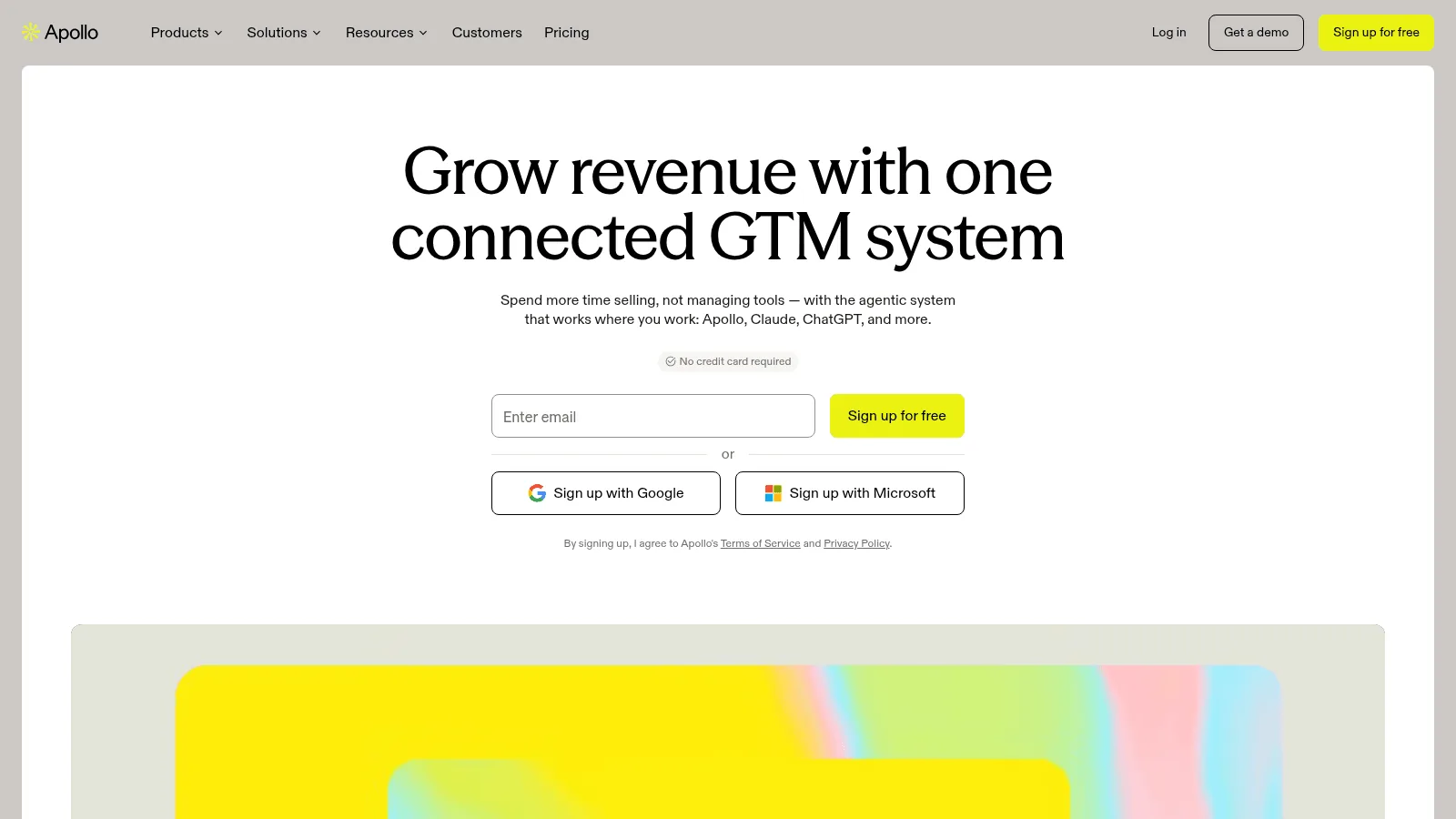
Best for: Data and outreach in one seat.
Overview: Apollo.io bundles contact data with sequencing, dialing and a light CRM, so it replaces Lusha and whatever you were sending from, at one price.
Key features:
- One credit buys an email and eight a phone number, drawn from a pool granted per seat.
- Verified emails are billed only when they verify, with a refund if one bounces inside 30 days.
- 240M+ contacts and 30M+ companies behind it.
Pricing: The free plan allows 900 credits per seat per year. Paid, a seat runs $49 a month billed annually or $65 month to month, with Professional at $79 and Organization at $119 on a three-seat minimum.
Pros: A real free tier, published rates, outreach included, a bounce refund window
Cons: Unspent credits lapse with each billing cycle, even ones bought as add-ons, and the allowance is tied to seat count rather than workload
Why buyers shortlist it: It is the cheapest published way to get data and sending together.
Final verdict: Strong value if the whole team uses it. Poor value if two people need a large allowance.
3. ZoomInfo

Best for: Enterprise coverage.
Overview: ZoomInfo is the scale option, with intent data and visitor identification alongside the database. On credits it is also the least transparent entry here.
Key features:
- Each export costs one credit, and that includes extension and API calls.
- 500M+ contacts and 100M+ companies.
- Intent signals and visitor identification bundled into the platform.
Pricing: Quote only, assembled from features, license count and credit usage. A permanently free ZoomInfo Lite tier needs no card, documented on its homepage rather than its pricing page.
Pros: Coverage nothing here matches, a free entry point, signals included, API and MCP available
Cons: Neither the credit rate nor the miss rule is published, so cost per usable record cannot be modeled before a sales call
Where it fits: When coverage is the binding constraint and procurement is not.
Final verdict: Buy it for reach. Do not expect to forecast the credit line.
4. Cognism
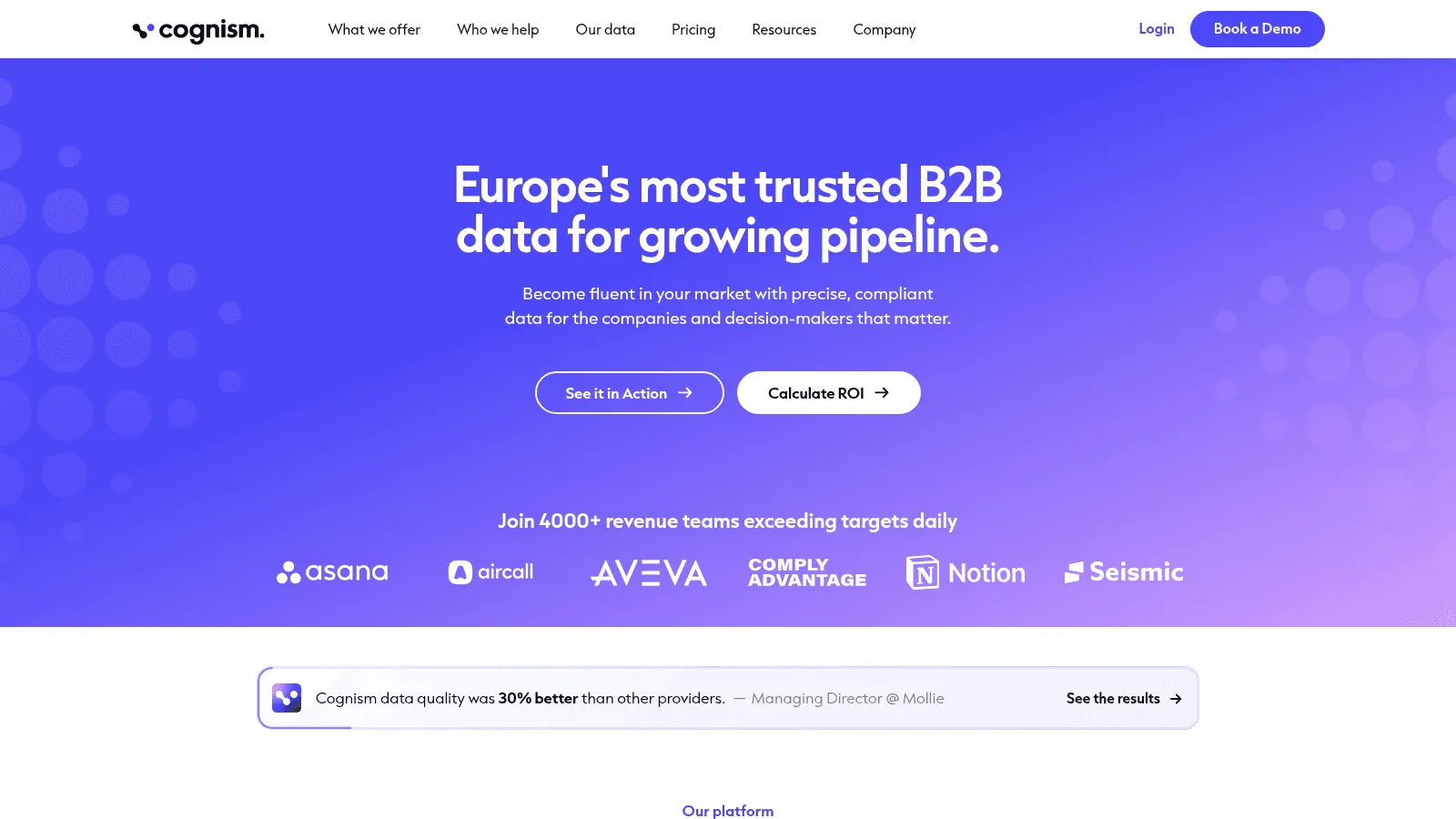
Best for: European mobile numbers.
Overview: Cognism is the specialist for dialable mobiles in Europe, and it simplifies the credit question in one useful way: one credit reveals one contact, whatever data comes with it.
Key features:
- A single credit per revealed contact, with the same pool covering the app, enrichment and the API.
- A stated 30-day refresh cycle on 95% of Director-level and above contacts.
- Do-not-call screening inside the workflow.
Pricing: Quote only, sold as packages built around five seats rather than per user. The API is included from the entry package.
Pros: One flat credit per contact removes per-data-point arithmetic, strong European mobiles, API without an upgrade, screening included
Cons: No published price, no published miss rule, and five-seat packaging makes it costly for a small team buying data alone
Its real strength: A flat credit per contact is the simplest unit in this comparison.
Final verdict: Worth the quote for phone-led European teams. Hard to justify otherwise.
5. UpLead
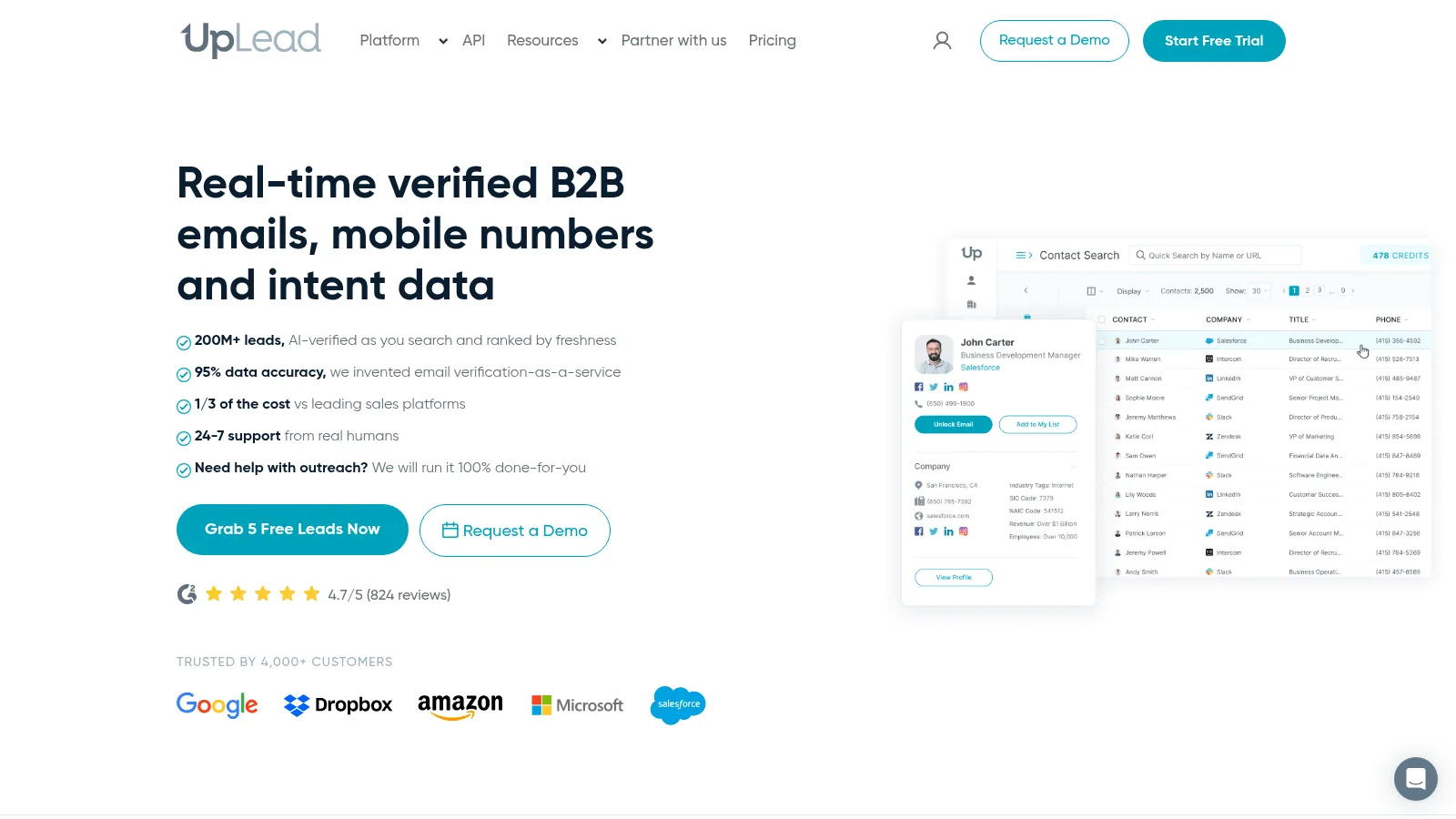
Best for: A written accuracy guarantee.
Overview: UpLead bundles a contact's email and mobile into a single credit and backs the data with a published guarantee, which removes two of the three variables that make Lusha hard to forecast.
Key features:
- One credit covers email and mobile together, rather than pricing each separately.
- A 95% accuracy guarantee with credits returned when it fails.
- A Valid Only export withholds invalid addresses; its other two export modes bill for them.
Pricing: Essentials is $74 a month billed annually, releasing 2,040 credits for the year, or $99 monthly for 170 at a time. Plus runs $149 and $199. A seven-day trial carries five credits, and full API access sits on the custom-priced annual Professional plan.
Pros: A bundled credit, a written remedy, an export mode that skips invalid addresses, published prices
Cons: Essentials and Plus are single-user, the full API needs a custom annual contract, and the guarantee never defines what counts as poor data
Why it earns a place here: Bundling email and mobile into one credit is the cleanest answer to per-data-point pricing.
Final verdict: Excellent for one person. Awkward the moment a second needs access.
6. RocketReach
Best for: Lookups refunded when they fail.
Overview: RocketReach takes the clearest published position on misses of anyone here: if it cannot find and verify a contact, the lookup is handed back.
Key features:
- A lookup returns the contact details on a profile and is refunded when nothing is found and verified.
- 700M profiles and 60M companies.
- MCP and API access across every paid tier.
Pricing: On annual billing the ladder runs $33, $75 and $142 a month for Essentials, Pro and Ultimate, with Essentials covering email only. Paying monthly roughly doubles each rung. Five lookups come free without a card.
Pros: Refunds stated as a rule rather than a courtesy, one lookup covers every contact detail on a profile, programmatic access throughout, no hidden billing basis
Cons: The meter is still a seat, the annual tiers describe lookups as unlimited while capping exports, and phone data is absent at entry level
Why it made this list: It removes wasted spend without asking you to change how you work.
Final verdict: A sensible swap if misses, rather than seats, were the problem.
7. Findymail
Best for: Bounce-rate guarantees.
Overview: Findymail sells verified emails with a bounce guarantee attached, and is in the middle of moving how it presents pricing, which is worth knowing before you compare it to anything.
Key features:
- One credit per email, ten per phone, and nothing at all when a search comes back empty.
- A published bounce guarantee, refunding credits if the rate exceeds its stated threshold.
- Credits bank up to twice the plan allowance.
Pricing: Its pricing page now opens on usage plans priced by seat, at $99, $399 and $999 a month for one, five and twenty seats, with no credit counts shown. The credit plans still exist behind a link, starting at $49 a month for 1,000 credits.
Pros: A bounce guarantee with a stated threshold, no charge on a miss, credits that bank, a low credit-plan entry price
Cons: The default pricing view now hides the credit plans behind a link, its mobile finder is non-EU only, and there is no free plan
Where it fits: When deliverability is the metric you are judged on.
Final verdict: Good on guarantees. Read past the first pricing view to find the plan you actually want.
8. LeadMagic
Best for: Success-only billing.
Overview: LeadMagic bills only when a lookup succeeds and prices each operation separately, which makes forecasting unusually straightforward once you know your hit rate.
Key features:
- Validation is priced in fractions, at a quarter of a credit, against one for an email and five for a mobile.
- Nothing is charged when a lookup fails, and LeadMagic says so on the pricing page rather than in the terms.
- Four delivery routes ship with every tier: REST, a hosted MCP server, a command line and CSV.
Pricing: Paying yearly, 5,000 credits cost $83 a month, 20,000 cost $208, 50,000 cost $416 and 100,000 cost $708. Monthly billing lifts those to $99, $249, $499 and $849. Opening the workspace to colleagues is a separate charge of $49 each per month, and only from the 50,000-credit tier upward.
Pros: Nothing billed on failure, fractional charging for validation, all four delivery routes at entry level, monthly balances bank to twice the allowance
Cons: Neither a free plan nor free credits to test with, yearly balances that never bank, and a per-colleague fee on the larger tiers
Why buyers shortlist it: Per-operation pricing with free misses is the easiest model here to forecast.
Final verdict: A clean swap for contact lookups, provided you read the seat line before adding colleagues.
9. FullEnrich
Best for: Waterfall enrichment, unlimited users.
Overview: FullEnrich runs a waterfall across multiple sources and charges only for data it actually finds, with no per-user fee at any tier.
Key features:
- A work email costs one credit, a mobile ten, and a personal email three.
- Unlimited users on every plan, including the trial.
- API and MCP access on every tier.
Pricing: $26 a month billed annually, or $29 monthly, covers 500 credits, with 1,000 at $49 and $55. A free trial gives 50 credits without a card. Credits roll over for three months on monthly billing and twelve on yearly.
Pros: Unlimited users everywhere, pay only for what is found, generous rollover, API on the entry tier
Cons: A mobile costs ten times an email, and the waterfall means coverage depends on sources it does not own
Where it beats the alternatives: Unlimited users plus rollover removes both of the variables that make Lusha unpredictable.
Final verdict: Strong value for small teams enriching in bursts.
10. Datagma
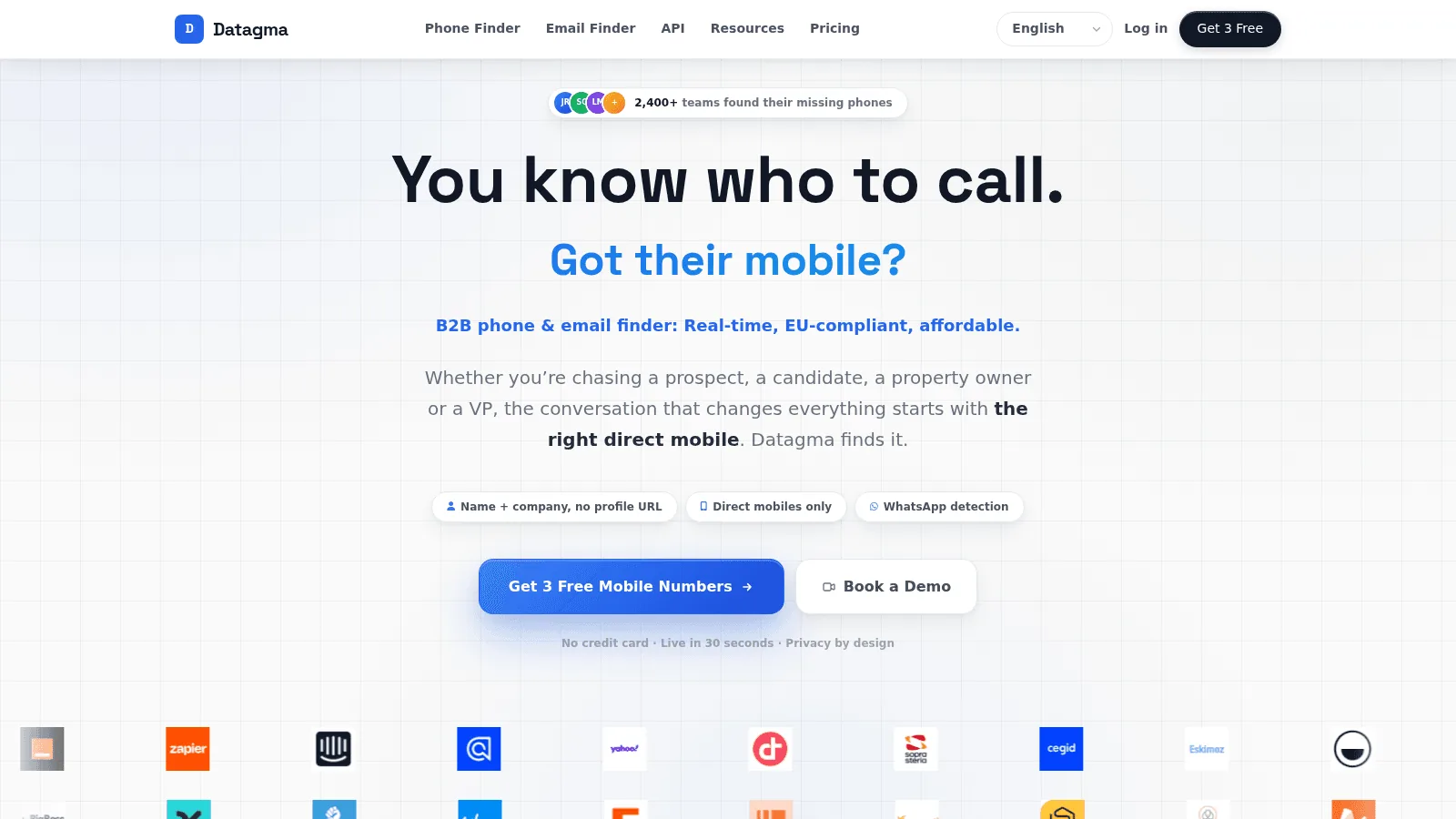
Best for: European email work, month to month.
Overview: Datagma focuses on European contact data and prices phones very differently from everyone else, which makes it either the right tool or an expensive mistake depending on what you need.
Key features:
- One credit buys a verified email; a mobile costs thirty.
- No charge when a lookup finds nothing.
- Credits roll over for up to twelve months on paid plans.
Pricing: A free tier gives 100 credits a month. Regular is $39 a month billed annually, or $49 monthly, for 3,000 credits. Popular is $79 or $99 for 7,500 across three seats, and Expert $209 or $249 for 22,500 across five.
Pros: A permanent free tier, twelve-month rollover, no charge on a miss, month-to-month billing available
Cons: Thirty credits a mobile is the steepest phone pricing here, and it publishes no database size
Why it made this list: A twelve-month rollover window, matched here only by FullEnrich on yearly billing.
Final verdict: Good for European email work. Price the phone credits carefully before committing.
Sizing a Credit Budget Before You Commit
The mistake is not picking the wrong vendor. It is buying an allowance based on how many contacts you want rather than how many attempts that will take.
Start from attempts, not contacts
Divide the records you need by your hit rate to get attempts, then price hits and misses separately. If you need 1,000 mobile numbers and your hit rate is 60%, you are making roughly 1,667 attempts. At Datagma's 30 credits a mobile that is 30,000 credits for the thousand you wanted, and the 667 misses add nothing because misses are free there. On Lusha's API the same run adds 667 more credits, one for each empty call.
Run 200 to 500 rows before committing to anything annual. That sample tells you your real hit rate on your own list, which is the only number that converts a price page into a budget.
Expect phone data to behave differently
Phone coverage is worse than email coverage almost everywhere, and the numbers decay faster. The US regulator's own rules on reassigned numbers note that approximately 35 million numbers are disconnected and made available for reassignment each year, which the FCC describes as a significant problem for callers. A mobile number you bought eighteen months ago may now belong to someone else entirely, and no amount of verification at purchase time protects against that.
Some providers have concluded it is not worth the trouble. The founder of one AI-driven data company told us they dropped phone numbers entirely, because accuracy ran lower, customers complained about wrong numbers, and unlike an email there is no automatic way to validate one: "It's more of a hustle than an advantage because it's less accurate."
That is part of why phone credits cost five to thirty times an email, and why re-checking a number matters more than stockpiling numbers. Working from an email to a current number is usually cheaper than holding an aging list, and that is the practical case for treating phone lookup as a just-in-time call rather than a stockpile.
Buy small and often rather than large and annual
People are consistently bad at predicting their own usage, and the bias runs in one direction.
Studying cellular plan choice in the American Economic Review, Grubb and Osborne found consumers overconfident about their own usage, underestimating the variance of future calling, with that overconfidence costing around $76 a year at the prices of the time. They also found users inattentive to what they had actually spent before. The point transfers directly to anyone sizing a credit pack.
The defense is unglamorous. Buy a smaller allowance than you think you need, watch what you actually spend for a month, then size the annual commitment against evidence. Where credits expire, that caution is worth real money; where they roll over, it costs you nothing but a little admin.
Choosing Between Them
Among Lusha competitors the headline rate is the least useful number on the page. Pick on the mechanic that caused the problem instead.
If per-data-point pricing was the issue, Cognism and UpLead both bundle a contact into a single credit. If paying for misses was the issue, RocketReach refunds them and LeadMagic, FullEnrich, Findymail and Datagma never charge for them. If expiry was the issue, Datagma's twelve-month window and FullEnrich's rollover are the most generous here, and Apollo's cycle-end expiry is the strictest. If seats were the issue, FullEnrich has none and neither do we.
If the lookups are happening inside software rather than a browser, that is our ground. Take a free API key, run 200 of your own rows, and work out your real cost per usable record before anyone signs anything.
FAQs
Do Lusha credits roll over?
Only on monthly billing, and only on the upper tiers. Lusha's documentation says annual credits "do not roll over under any circumstances" and are forfeited even when the subscription renews. Monthly Pro and Premium plans can bank up to twice the allowance, while Free and Starter bank nothing. If you are weighing the annual discount, price in the allowance you will not use.
Are there free tools like Lusha?
Several tools like Lusha offer a free tier, with real limits. Apollo.io gives 900 credits per seat per year, ZoomInfo Lite is a permanent free plan, Datagma allows 100 credits a month and RocketReach five lookups. We give trial credits with no card rather than a free plan, which we would rather state plainly than dress up. Free tiers are for testing a hit rate on your own list, not for running outbound.
Which apps like Lusha do not charge for failed lookups?
Among Lusha competitors, LeadMagic, FullEnrich, Findymail and Datagma all state that a lookup finding nothing costs nothing. RocketReach refunds the lookup instead. On our side, searches, cached lookups and email or phone lookups that find nothing are free, though a live fetch or enrichment returning a 404 is billed two credits. Apollo charges only when an email verifies, and ZoomInfo and Cognism publish no rule.
Why do phone numbers cost more credits than emails?
Because they are harder to source and harder to keep correct. A mobile runs from 5 credits at Lusha and LeadMagic through 8 at Apollo and 10 at Findymail and FullEnrich to 20 with us and 30 at Datagma, against a single credit for an email at most of them and 3 at ours.
Cognism, UpLead and RocketReach bundle the two instead. Reassignment is part of the reason, with tens of millions of US numbers changing hands each year, so a stored number ages badly in a way an email domain usually does not.
What should I pay per contact?
Work it out rather than comparing sticker prices. On Lusha an email lands near $0.09 to $0.12 and a phone near $0.44 to $0.62, depending on plan and billing basis. Then adjust for your own hit rate and for whether misses are billed, because a cheaper credit on a vendor that charges for attempts can cost more per usable record than a dearer one that does not. The broader email finder tools market shows the same spread.
The data layer behind your GTM engine
Access fresh people and company data through one API and power every enrichment, prospecting, and automation workflow.
- Profiles
- 800M+
- Refreshes / month
- 200M
- Response time (P95)
- 500ms