
8 Coresignal Alternatives for Employee and Company Data
Julien K.Published
Key takeaways:
- Coresignal's core products are employee records, company records and job postings, sold by API or as bulk datasets. Crustdata is the one alternative here that sells all three plus bulk files as standard (People Data Labs comes close, but its job postings API is a beta you request), so most teams replace just the one product they actually use.
- Billing units differ more than prices. Coresignal charges 20 credits for a standard employee or company record and 1 for a job posting, TheirStack 1 per job and 3 per company, and PredictLeads 1 per request of up to 1,000 records.
- For job postings, Coresignal is hard to beat at entry tier, at about 2 cents a posting. TheirStack and PredictLeads win on extras: job webhooks and closed-posting tracking at one, bulk pulls billed per request at the other.
- We're the API half, not a dataset vendor. Reverse Contact sells live and cached lookups, and showing our data inside your product takes a Platform contract, priced on a call with sales.
Coresignal is a B2B data vendor that sells employee, company and job posting records two ways: as files you load into your own warehouse, or through an API (an interface your code calls to fetch one record at a time). Its homepage lists 907M+ employee records, 482M+ job postings and 70M+ company records, and every API tier is priced openly on its site.
Teams usually shop for Coresignal alternatives for one of three reasons: the cost per employee record, the commitment a dataset asks for, or a gap between what Coresignal sells and what their product needs to show. Some want a live data enrichment API that fills in one record at the moment a user asks, while others want hiring data with webhooks or bulk pulls attached.
This guide compares eight options for product and data teams. Reverse Contact is our own product, so it's listed first, and we'll say plainly where it doesn't fit. Every price comes from the vendor's own pricing page or docs, read in October 2026.
What You're Replacing: Records, Jobs or Bulk Files
Before you compare Coresignal competitors, write down which of its products your team really uses.
The table below sets Coresignal's footprint against each alternative. "Not published" means we couldn't find it on the vendor's site or docs, and we kept Coresignal in the first row as the baseline.
| Vendor | People records | Company records | Job postings | Bulk files |
|---|---|---|---|---|
| Coresignal | 907M+ employee records | 70M+ | 482M+ | Datasets from $1,000, monthly payments on a yearly contract |
| Reverse Contact | Yes | Yes | No | No off-the-shelf dataset; CSV export of your searches and CSV enrichment of your own files |
| People Data Labs | Yes | Yes | Beta, on request (46.2M records) | Enterprise license feeds |
| Crustdata | Yes | Yes | Yes | Flat files, through sales |
| Aviato | Yes (~1.22B in its docs) | Yes (~46M organizations) | Not listed | Data dumps |
| Explorium | Yes | Yes | Hiring events feed | Not published |
| LeadMagic | Yes | Yes | Yes (46M+ open) | Not published |
| TheirStack | No | Yes | Yes | Datasets, through sales |
| PredictLeads | No | Yes | Yes | Flat files on Enterprise |
Read down the columns: six of the eight sell people records, four sell job postings as a standard product and five sell bulk files, but only Crustdata ticks every column. People Data Labs fills the jobs column too once you count its beta, which is why those two are the closest like-for-like swaps.
None of these Coresignal alternatives is a tool for reps who reveal contacts one at a time in a browser. A sales team that used Coresignal data that way should compare per-seat tools with phone data, such as Lusha and its alternatives, rather than another API.
Why Teams Look for Coresignal Alternatives
Most teams that leave Coresignal aren't unhappy with it across the board; they've hit one cost or one gap tied to how they use it. Some gaps have nothing to do with data quality: a sales team that wanted a prospecting app with sequences never needed raw records, and is better served by Apollo.io and the Apollo alternatives that bundle outreach.
Profile Records Are the Expensive Unit
Coresignal's docs price a standard employee or company record at 20 credits and a job posting at 1. Its Mini plan costs $49 a month for 2,500 credits, which buys 2,500 job postings or about 125 employee or company records.
That's fine if your product mostly reads hiring data. A product that shows a person's profile every time a user clicks, though, burns through credits 20 at a time. On entry plans a company record costs about 39 cents at Coresignal and about 10 cents at TheirStack (3 credits), so price your own mix.
A Dataset Asks You to Commit Early
On the bulk side, Coresignal prices datasets from $1,000, with monthly payments over a yearly contract, and its FAQ says the final price depends on contract length, locations and source tier. Historical data is available, but the commitment comes before you know how often your product really needs fresh data or which fields it reads.
Refresh cadence is usually where the surprise lands. In a thread on Reddit about daily job posting feeds, one user said they tried Crustdata but its flat file was "updated only monthly," and another replied that Coresignal's jobs data "recently got 10 times cheaper."
Both are single experiences, not tests, but they're the two questions to put to any vendor before you sign: how often the file refreshes, and what a record costs today.
Company Records Age Between Snapshots
Company data changes faster than most teams assume. The U.S. Census Bureau counted 531,728 business applications in August 2026 alone, adjusted for seasonal variation, each one a possible new company that a July snapshot can't contain.
Europe shows the same churn from both ends. Eurostat reports that in 2024 the EU's enterprise birth rate stood at 10.4%, while the preliminary death rate was 9.2%, across 34 million active enterprises.
Add the two together and close to a fifth of the EU's enterprise count was either born or closed in a single year. A monthly file refresh is fine for analytics, but a product showing one company to one user may need fresher data than the last snapshot.
When Coresignal Is Still the Right Call
Stay with Coresignal if you need historical employee and company data in your warehouse at a price you can see before a sales call. Few vendors publish a dataset price at all, and its API ladder runs openly from $49 to $5,000 a month.
It's also strong value for job postings. At entry tier, Mini works out to about 2 cents a posting, against about 3.3 cents on TheirStack's cheapest API plan. Its filter and Elasticsearch searches are free and credits come off only when a record fetch succeeds, though Search Preview and Agentic Search are billed. If those are the parts you use, the alternatives below mostly cost you more work for the same result.
The 8 Best Coresignal Alternatives Compared
We put Reverse Contact first because we make it. The rest of these Coresignal competitors run from the closest swaps (People Data Labs and Crustdata: people, companies, jobs and files), through two people-and-company vendors without job postings (Aviato for funding data, Explorium for events), to the specialists: a contact-first API, then two company and hiring data vendors that sell no person records.
The last column shows what one credit buys, which decides your bill more than the entry price.
| Tool | Best for | Key features | Main limitation | Pricing (from) | What one credit buys |
|---|---|---|---|---|---|
| Reverse Contact | Products that show people data to users | Search with filters, free freshness check, cached or live per request | No job postings or off-the-shelf datasets | Credit packs from $100; team plans from $249/month; Platform priced on a call | 1 cached profile; 2 per live lookup; 3 per email found; 20 per lookup that finds a phone |
| People Data Labs | Large person and company tables | Job Posting Search API, per-match billing | Free tier hides contact fields | Free; $98/month or $940/year | 1 record, charged per match |
| Crustdata | Change watchers on people and companies | Watcher API, per-endpoint credit table | No dollar prices on its site | Credit packs, priced per endpoint | About 33 job results; enrichments vary (up to 9 per person) |
| Aviato | Startup, funding and vesting data | People and company API plus data dumps | No public price list | Quote only | Not published |
| Explorium | Prepaid packs with business events | Events feed, AgentSource API, MCP | Service stops at zero by default | $29.99 pack (500 credits) | 1 to 5 credits per enrichment |
| LeadMagic | Contact data plus open jobs | Success-only lookups, job change detector | No free plan or free credits | $83/month billed annually ($99 monthly) | 1 email found; 5 per mobile |
| TheirStack | Job postings and tech stacks | Job and company webhooks, 12-month rollover | No person records | Free plan; API $49/month | 1 job; 3 per company |
| PredictLeads | Company signals for AI agents | Up to 1,000 records per request, news events | Credits expire each month | Free 100 calls/month; $40 monthly minimum | 1 request, up to 1,000 records |
The spread in that last column is wide enough that the cheapest-looking plan can be the most expensive for your workload. Price the records you'd pull in a real month before you shortlist any Coresignal alternatives.
1. Reverse Contact
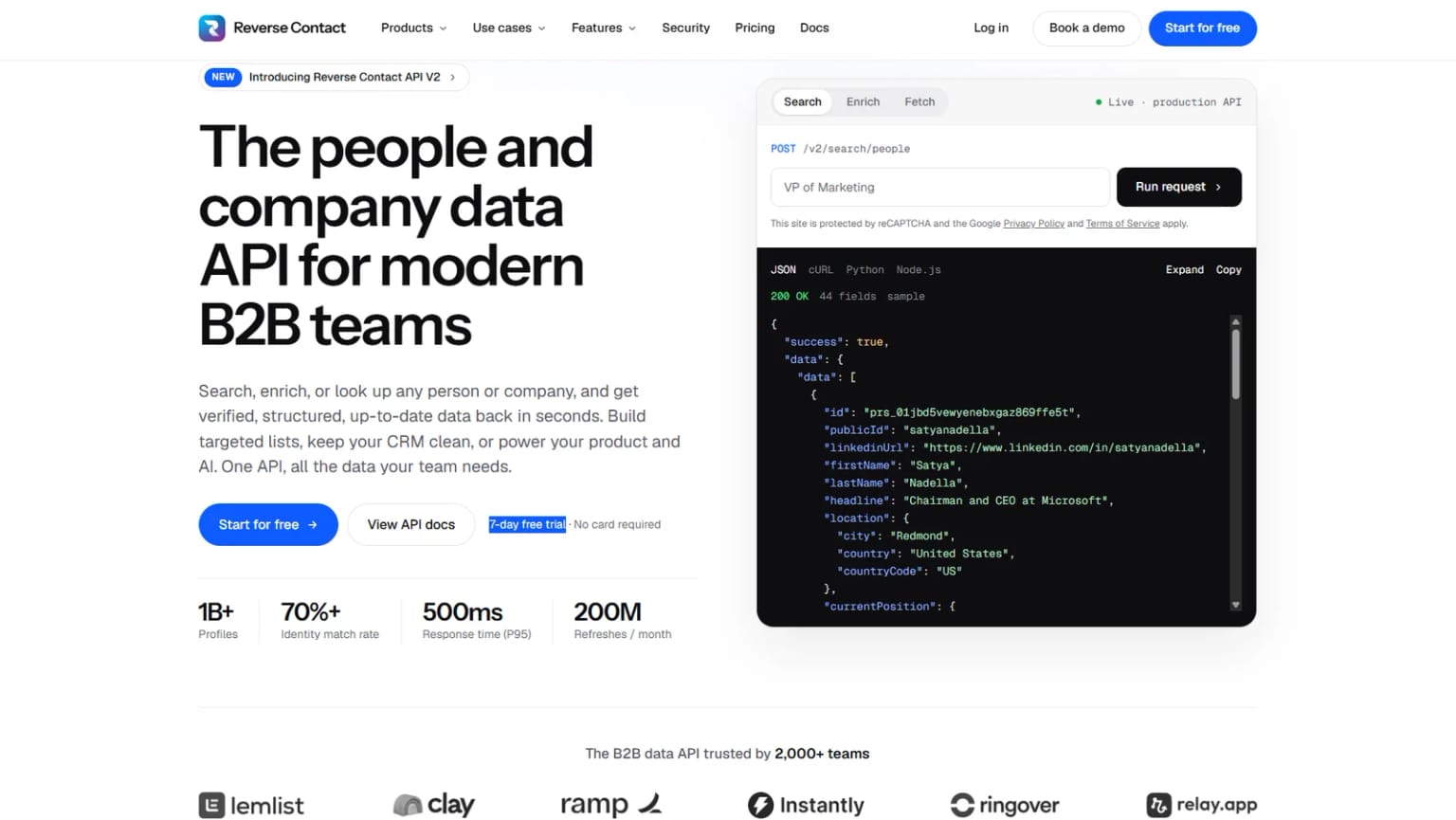
Best for: Products showing people data to users.
Overview: Reverse Contact gives your software direct access to people and company data through an API, with no dashboard to click through. Your code passes in an identifier or a few search criteria and gets back a structured profile in JSON, the plain-text format most programs read.
Where a Coresignal dataset hands you files to store, we're the live half of the job. Each request picks its path. Reading from cache, meaning a copy already stored on our side, is the quick route. Asking for live data means we retrieve the profile at that moment, as a background job that often takes tens of seconds and sometimes several minutes, with the result delivered by webhook (an automatic message to your server once it's ready). We don't sell off-the-shelf datasets.
On quality, a profile that fails our checks stays out of the response. If more than one person could fit your input, you can get those candidates back and choose yourself, instead of a silent guess.
Amplemarket, a sales platform, shows how search, matching and refreshes add up in a product. It finds people with our search, matches partial CRM records to full profiles, then refreshes millions of profiles every month on a cadence it sets itself: every two weeks for the ones it scores as higher value, monthly for the rest. Its own engine compares the versions to spot job changes and promotions, so those alerts are Amplemarket's, not ours.
Key features:
- People search filtered by job title, seniority, industry, company size and location, plus a free count of how many profiles match.
- A free
/checkcall returns a record's last full refresh date, so you only pay for a live copy when the cached one is too old. - Enrichment that starts from an email, a person's name with their company's domain, or a company name.
- Contact lookups bill on results: 3 credits for each email we find, 20 for a lookup that turns up a phone number.
- The JSON looks the same whether it reaches you through the REST API, a webhook, a CSV file you enriched or our MCP server (a connector AI assistants use to call tools).
- Empty email or phone lookups, standard searches, enrichments, and cached or live lookups cost nothing.
Pricing: You can buy credits as you go, in packs from $100, and team plans run $249 (Go), $449 (Plus) and $699 (Max) a month, billed monthly with no annual commitment. Go removes the meter on lookups by profile ID, Plus does the same for search, and Max lifts the cap on enrichment too; real-time re-fetches, emails and phones are billed on every plan. All three are licensed for your own team. Once your customers see the data, you need a Platform contract, priced on a call with sales, which adds a reselling and embedding agreement, high rate limits, priority support and a guaranteed uptime SLA.
Pros: Published prices for Go, Plus, Max and credit packs, free freshness checks and match counts, no charge when a standard search or cached lookup finds nothing, candidates shown on ambiguous matches, one schema everywhere
Cons: No job postings, off-the-shelf datasets or historical headcount snapshots, in-product use needs a Platform contract
How to start using it:
- Register, and you'll get trial credits with no card asked for.
- Choose about 150 profiles that get the most views in your product, plus a few people you know have moved jobs.
- Run
/checkon them, then fetch cached copies and live copies for the oldest. - Compare titles, employers and empty results against what Coresignal returned for the same people.
- If customers will see the data, book a call to size Platform.
Why it's a good Coresignal alternative: You pay per profile you use and choose per request whether the cached copy is fresh enough. For comparison, Coresignal's Real-time Employee API costs 12 credits a record from its $1,000 Growth plan up, and its standard employee record costs 20 on every fetch.
Final verdict: Pick Reverse Contact when your product shows people and company profiles one at a time and freshness matters to your users. If you need job postings or a full warehouse copy with history, Coresignal, People Data Labs or Crustdata fit that job better.
2. People Data Labs
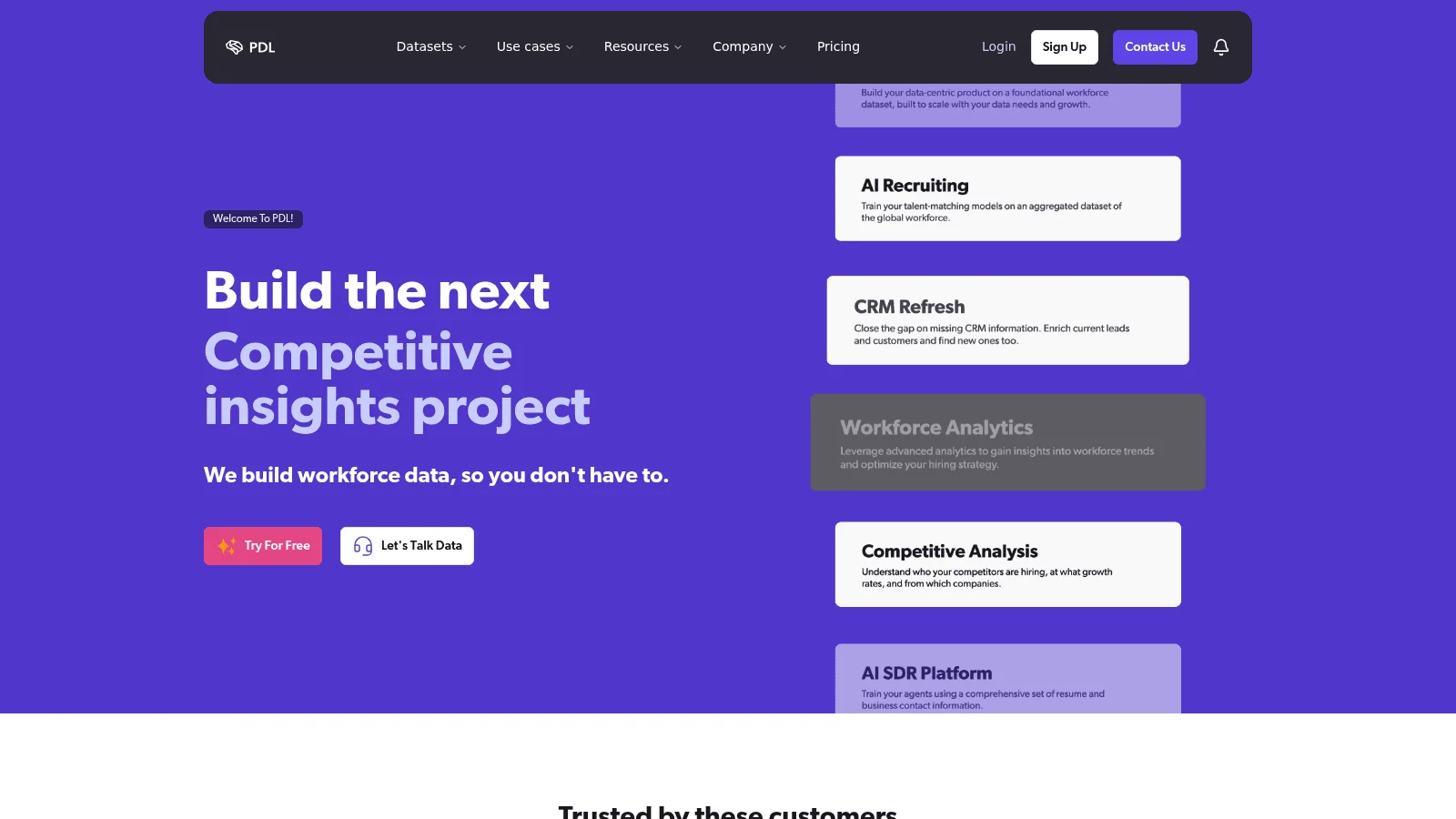
Best for: Large person and company tables.
Overview: People Data Labs (PDL) sells person, company and job posting data by API or by license. PDL counts more than 1.5 billion unique people and over 70 million companies, and its docs list 46.2 million job posting records, about 7 million of them active.
Key features:
- A Job Posting Search API, in beta by request, beside its person and company endpoints.
- 1 credit equals 1 record, charged per match, so a lookup that finds nothing is free.
- Enterprise data license feeds that deliver the whole dataset as files.
Pricing: On the person side, Pro costs $98 monthly, or $940 if you pay for the year, and includes 350 credits each month. Company records sit on their own Pro plan at $100 monthly or $960 yearly, covering 1,000 records.
Pros: Per-match billing, people, companies and jobs from one vendor, a free tier for testing schemas
Cons: Emails, phone numbers and addresses are masked on the free tier, person and company data are priced on separate plans, bulk feeds need an annual Enterprise contract
Why it made this list: It's the nearest match to Coresignal's whole footprint, jobs beta included.
Final verdict: PDL fits teams that want Coresignal's breadth with a per-match API underneath it.
3. Crustdata
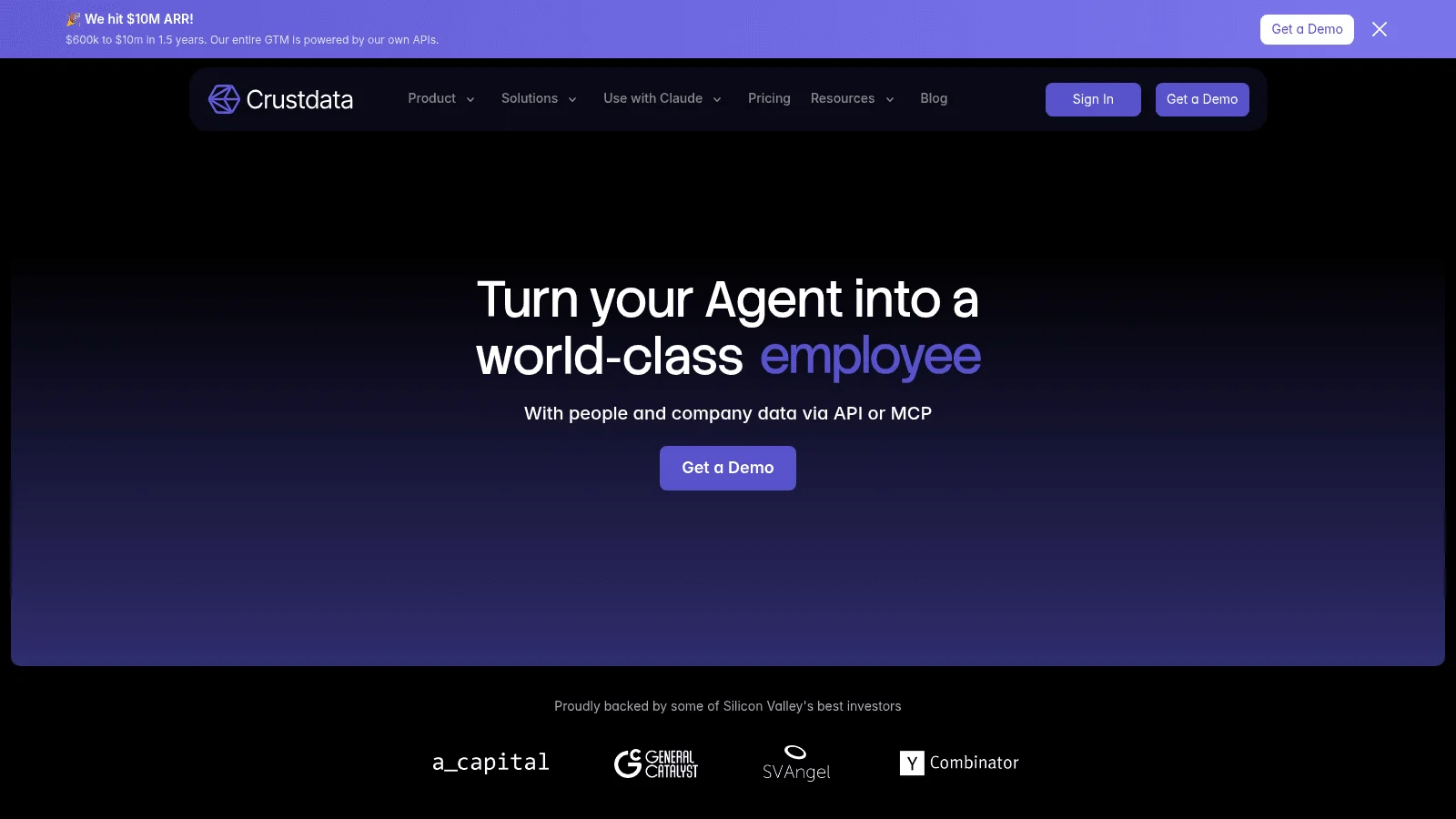
Best for: Change watchers on people and companies.
Overview: Crustdata sells people and company search and enrichment, jobs, posts and a Watcher API that notifies you when a tracked record changes. Its homepage claims "1B people" alongside 60M companies.
Key features:
- Job search at 0.03 credits per result.
- Entity watchers at 5 credits per changed person on a 30-day refresh, with no charge on runs where nothing changed.
- Flat files in CSV or JSON, refreshed monthly according to Crustdata.
Pricing: You won't find a dollar figure on Crustdata's website; the docs list a credit price for every endpoint instead, with a fully enriched person record capped at 9 credits. Purchased credits last 12 months, and developers can start on a free sandbox key.
Pros: Change notifications built in, a public credit table per endpoint, a free sandbox key
Cons: No dollar prices on its site, a 1-day watcher costs 150 credits per changed record, flat files go through sales
Where it beats Coresignal: If you'd otherwise build your own diffing on top of Coresignal's records, Crustdata sells that step ready-made.
Final verdict: Shortlist Crustdata when knowing that a record changed matters as much as the record itself.
4. Aviato
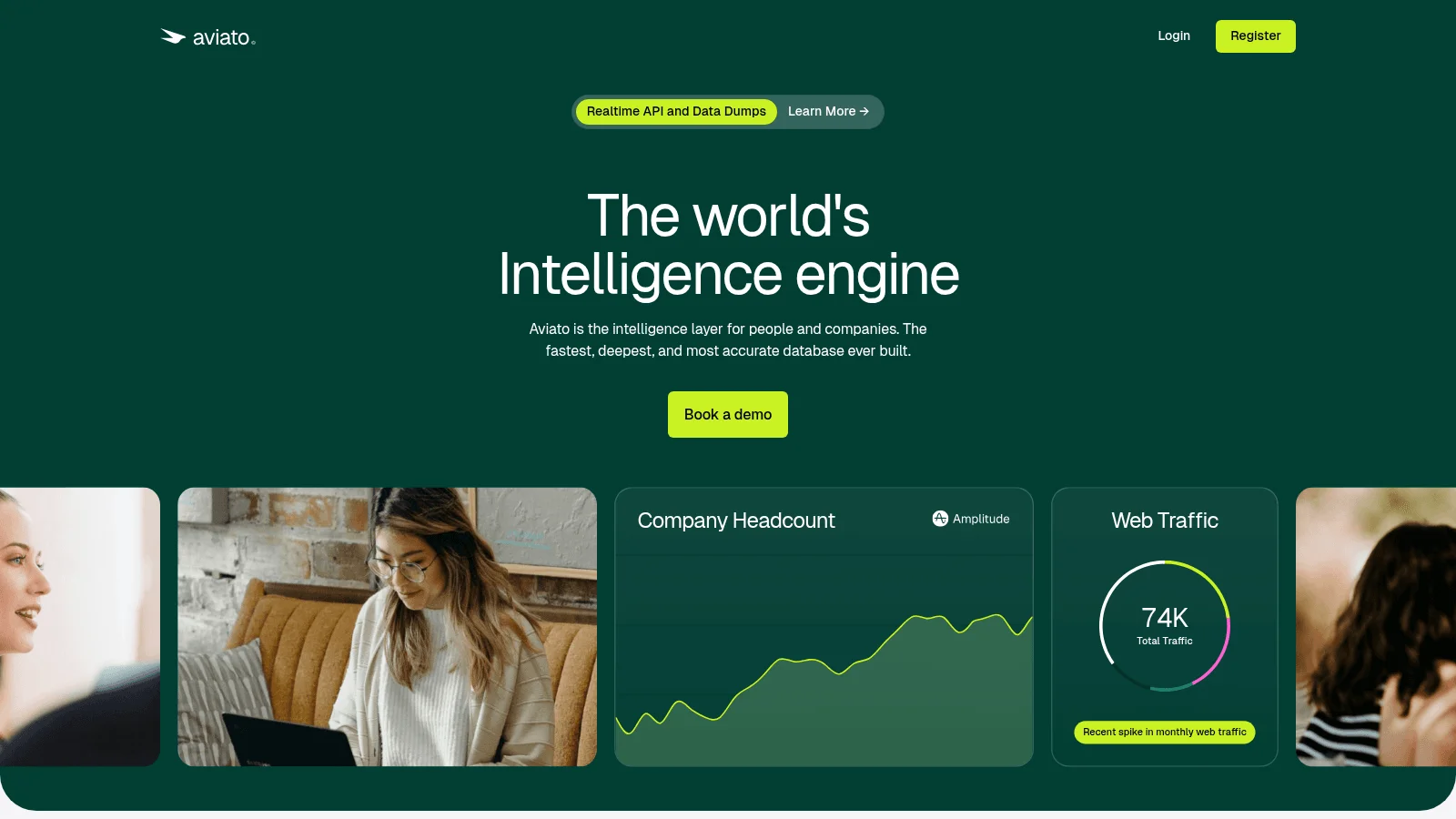
Best for: Startup, funding and vesting data.
Overview: Aviato offers a people and company API plus data dumps. Its docs list about 1.22 billion people and 46 million organizations, with contact info on roughly 62.7% of people and vesting schedules for 79.5% of people at companies with stock options.
Key features:
- Person and company enrich and search endpoints, including funding rounds, investors and founders.
- Data export endpoints that hand you a dump in downloadable chunks.
Pricing: Aviato publishes no price list, and its /pricing URL returned a 404 when we checked. Access starts with a demo or a registration, and the API reports a credit balance.
Pros: Deep funding, investor and vesting fields, API and dumps from one vendor, coverage percentages stated per field
Cons: No published prices, no self-serve price ladder, contact info on about 62.7% of people, lower than its other people fields
Why buyers shortlist it: Investment and talent products get compensation and equity fields that most people-data vendors don't list.
Final verdict: Aviato suits teams building for investors or recruiters who can wait on a sales conversation.
5. Explorium
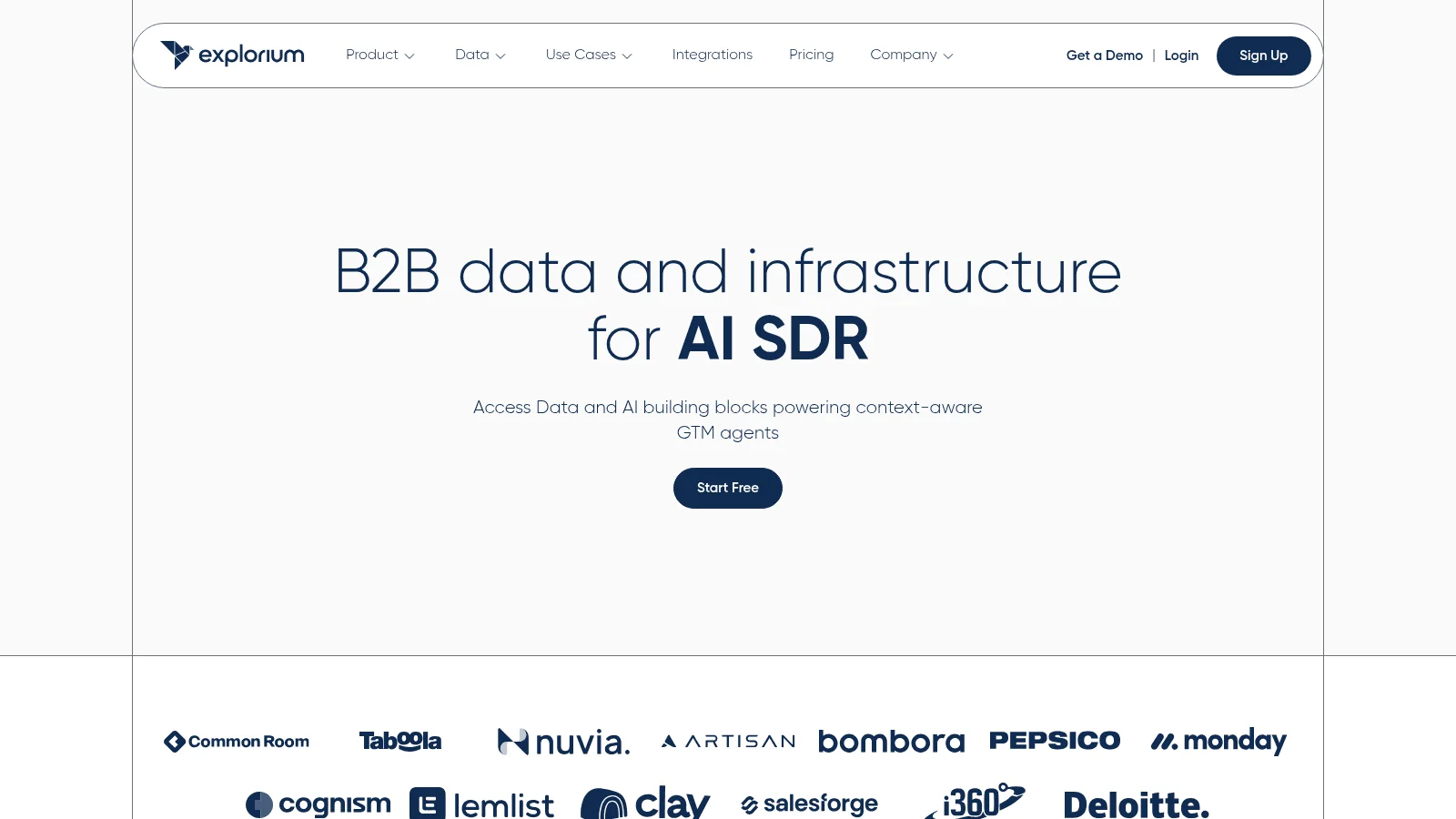
Best for: Prepaid packs with business events.
Overview: Explorium sells prepaid credit packs for its AgentSource API and MCP server. Its events feed covers moves like hiring by department, executives joining and new funding rounds, with webhooks for the companies you enroll.
Key features:
- Business and prospect events delivered by webhook.
- Enrichments from 1 to 5 credits each.
Pricing: Lite costs $29.99 for 500 credits and Starter $149.99 for 5,000. Credits last 12 months, and resell rights come only with the custom Enterprise tier.
Pros: A low entry pack, an events feed, a 100-credit trial valid for 90 days
Cons: Non-refundable credits, the service stops at zero unless you turn on Auto-Refill, its homepage gives two different coverage totals
What it does differently: Events arrive as signals rather than raw records you'd compare yourself.
Final verdict: Explorium works for prototypes that need company events on a fixed budget.
6. LeadMagic
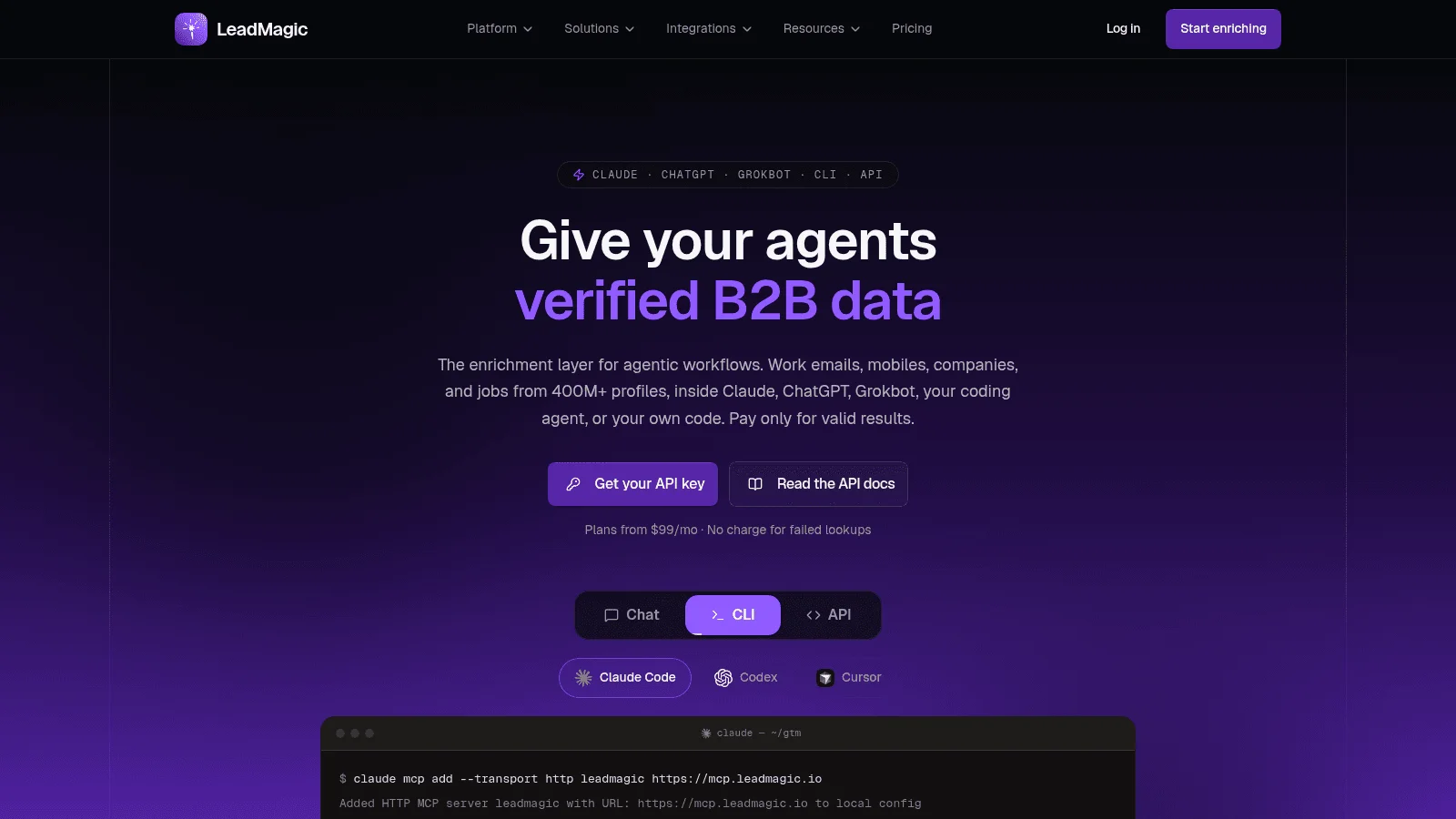
Best for: Contact data plus open jobs.
Overview: LeadMagic is an API built around finding contact details. Every plan includes REST access, a hosted MCP server, a command-line tool and CSV uploads, and its site lists more than 400M people profiles, over 25M companies and upward of 46M open job postings.
Key features:
- Emails cost 1 credit and mobiles 5, billed only when one is found.
- A job change detector at 3 credits per request.
Pricing: The 5,000-credit Essential tier is $99 on monthly billing, or $83 a month if you commit for a year. Enterprise starts at $2,490 a quarter.
Pros: No charge for failed lookups, all four delivery options from the cheapest tier, open job postings alongside contacts
Cons: Nothing free to test with, yearly-plan credits expire instead of rolling over, no published bulk files
Where it fits: Teams whose real need was emails and mobiles, with hiring data as a bonus.
Final verdict: LeadMagic suits sales-tech builders who care more about reaching people than about full work histories.
7. TheirStack
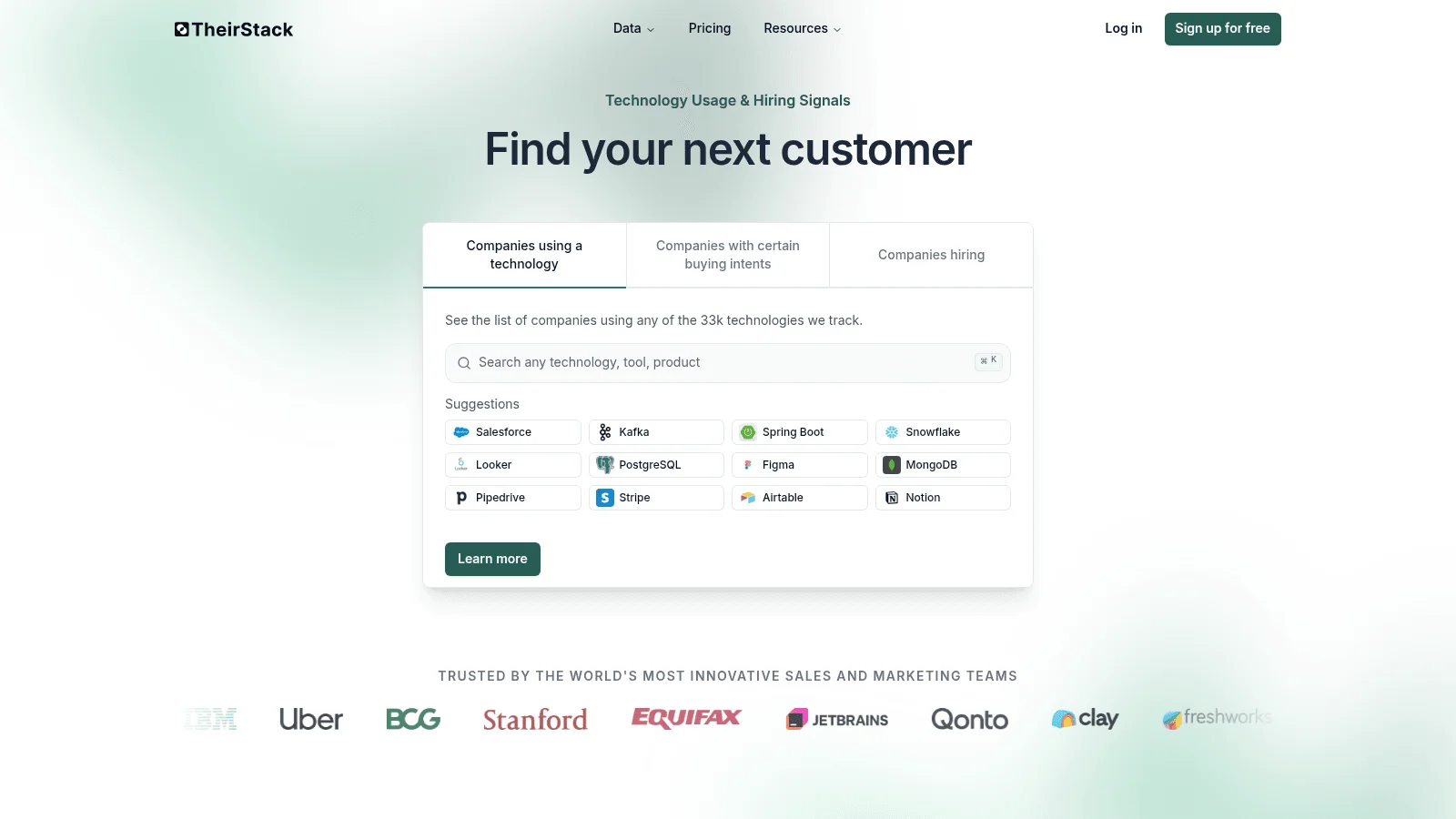
Best for: Job postings and tech stacks.
Overview: TheirStack sells job, technology and buying-intent data on companies, with no person records. Its pricing page lists a 225M-record jobs dataset growing by about 305,000 a day, with history back to 2021 (its homepage says 251M jobs).
Key features:
- Job Search API at 1 credit per job and 3 per company, charged only when data comes back.
- Webhooks for new jobs, closed jobs and new companies.
- Datasets in JSON, CSV or Parquet (a compressed table format) delivered to S3, GCS, Azure Blob or Snowflake.
Pricing: A free plan gives 50 company credits and 200 API credits a month to accounts that have never paid. API plans start at $49 a month for 1,500 credits, cancel anytime, and unused paid credits roll over for 12 months.
Pros: Charged only when data is returned, 12-month rollover, a real free plan
Cons: No person records, dataset prices only through sales, repeated requests for the same data are charged each time
Its real strength: Hiring data billed per job, like Coresignal's, with closed postings marked and tech-stack data in the same plan.
Final verdict: Test TheirStack if you want closed postings marked, job webhooks and credits that roll over for a year on top of the postings themselves.
8. PredictLeads
Best for: Company signals for AI agents.
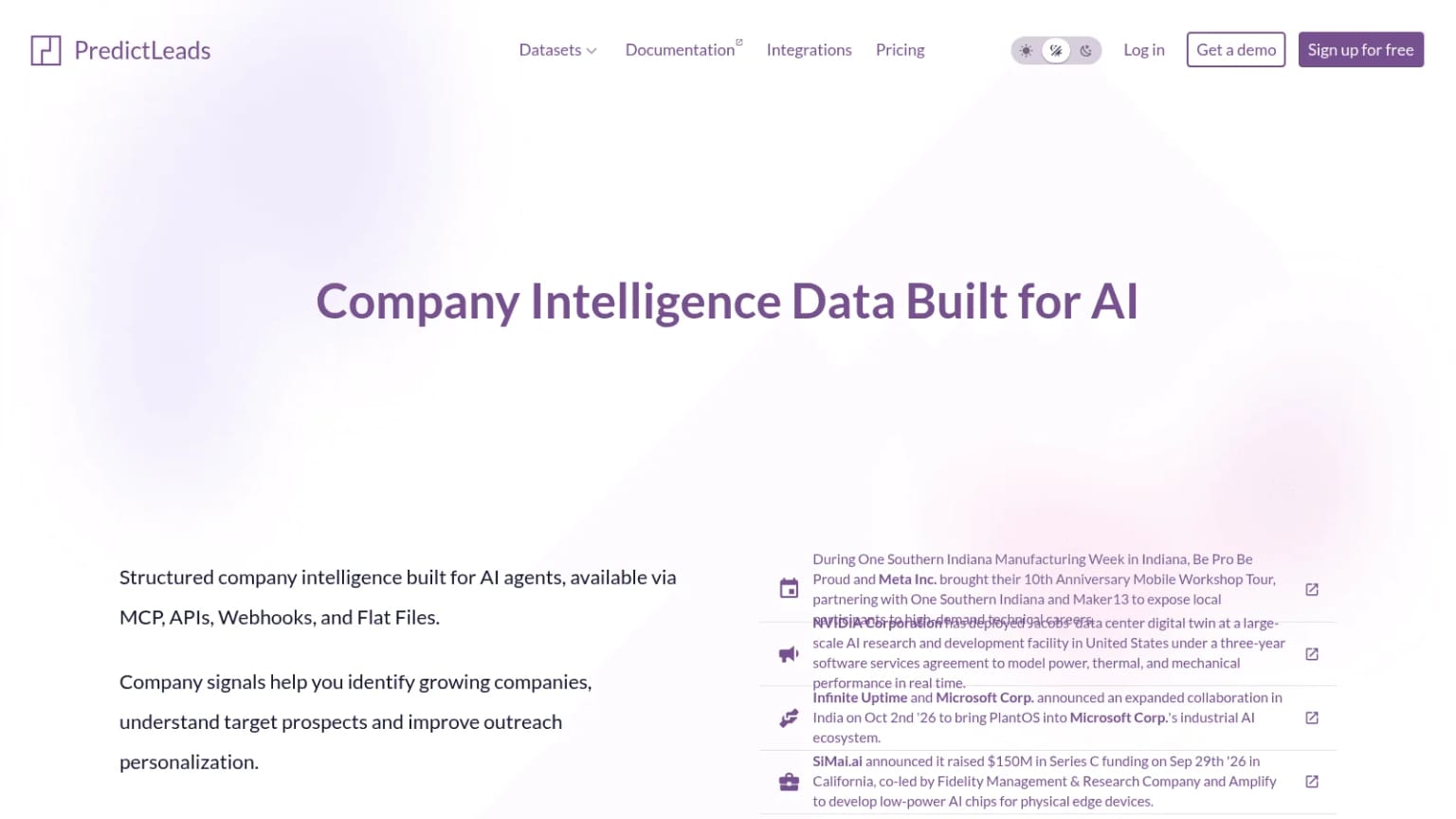
Overview: PredictLeads sells company data via MCP, API, webhooks and flat files: 120M+ companies, job openings on 2.7M+ companies (about 9.8 million active at any time) and news events in 37 categories. It has no person records.
Key features:
- 1 credit per request, returning up to 1,000 records.
- Followed companies push signals to your webhook at 1 credit each, never more than 10 per company a month.
- Enterprise flat files with full history from 2015.
Pricing: The first 100 API calls a month are free. After that you pay a $40 minimum monthly charge at $0.04 a credit, falling to $0.002 above 500,000 credits.
Pros: Per-request billing on big pulls, jobs, news and technographics (the software a company uses) joined by company domain, a free monthly allowance
Cons: No person records, unused credits expire each billing period, every page of results costs a credit
Why it earns a place here: Pulling up to 1,000 of a company's job openings for 1 credit is hard to beat for bulk hiring analysis.
Final verdict: PredictLeads fits agents and market-intelligence tools that read company signals, not people.
What Keeping a Dataset Current Costs
A dataset's price tag is only part of its cost. Keeping a copy fresh inside your own systems is ongoing work, and the bill for that work depends less on code than on scale.
As one executive at a business-intelligence platform put it to us, "it's not a technical challenge as much as it's a scalability and the kind of cost-sharing challenge." A vendor spreads the cost of keeping data current across many customers, and a single company can't.
The Update Work a File Leaves You
Teams loading monthly files usually compute the delta (just the rows that changed since the last snapshot) and import only those, rather than reloading everything. That works, but someone on your team now owns it, along with the cleanup when a vendor file arrives with anomalies.
Paying Only for the Records People Open
Teams that skip the full copy cut that work down a different way. They check their own database first and call a lookup only for records they haven't enriched yet, so repeat views cost nothing.
From there, they fill in the companies and people their users open most, often the top 10-20%, and refresh the long tail only when someone asks for it. That's how a basic data enrichment workflow scales without a warehouse copy of everyone.
What Coresignal Alternatives Cost
The table lists each vendor's lowest published price, the other billing option where there is one, and whether a lookup that finds nothing still costs you.
| Vendor | Lowest published price | Other billing option | Free tier or trial | Charged when nothing is found? |
|---|---|---|---|---|
| Coresignal | $49/month (2,500 credits) | Annual plans 10% off, from Starter | 7-day trial, 2,000 credits | No (credits only on a successful record) |
| Reverse Contact | Credit packs from $100 | Team plans from $249/month; Platform priced on a call | Free trial credits, no card | No on cached or live lookups, enrichment, standard search and email or phone lookups; an agentic search page that finds no one costs 1 credit |
| People Data Labs | $98/month | $940/year | 100 credits/month, contact fields hidden | No (charged per match) |
| Crustdata | No dollar prices | Credits valid 12 months | Free sandbox key | No on enrich and identify, per its docs |
| Aviato | Not published | Not published | Not published | Not published |
| Explorium | $29.99 pack | Prepaid packs only | 100 credits for 90 days | Not published |
| LeadMagic | $83/month billed annually | $99 monthly | None | No on lookups |
| TheirStack | $49/month (1,500 API credits) | API is monthly only; app company credits sold separately from $109 | 50 company + 200 API credits/month | No (only when data is returned) |
| PredictLeads | $40 monthly minimum | Per-credit rates fall with volume | 100 API calls/month | Not published (billed per request, not per record) |
The last column matters most for products with messy inputs, where a share of lookups will always come back empty. If your users will see the data, also price the license to show it: on our side that's a Platform contract quoted on a call, and on most other vendors it's an Enterprise conversation.
How to Move Off Coresignal Without Breaking Your Product
Switching a data vendor inside a live product takes longer than signing up for a trial, whichever of the Coresignal alternatives you pick. For a product integration, expect a structured test of one to two months from first call to decision, because swapping again after launch is painful.
Here is the order we'd work in:
- List every Coresignal field your product reads and the endpoint it came from.
- Pull 200-500 of your most-viewed records, with a handful whose details you know are out of date.
- Send the same inputs to two or three trials so the results are comparable.
- Score match rate and wrong answers separately, and count empty results.
- Compare refresh dates on the records that matched.
- Map the new response to your columns, keeping Coresignal IDs as a join key during the overlap.
- Run both vendors side by side for a few weeks before you cut over.
- Size your credits from the match rate you measured, not from the plan page.
Agree on the test set and the success metric before anyone runs a single call. Otherwise each vendor's sales team will grade itself on the measure it wins, and match rate alone flatters whoever returns the most guesses.
How to Choose a Coresignal Alternative
Start from what your product shows its users, not from a list of Coresignal competitors.
Your Product Shows People Profiles
If users click into individual people and companies, you need fast lookups, fresh data on the records they open, and a license to display them. Reverse Contact (on Platform) and People Data Labs are the two to test first, with Crustdata if change notifications matter.
You Build for Recruiters
Recruiting products need work histories and skills, which our person records include, and Aviato's vesting and compensation fields can help with talent and investor tools. If your recruiters look candidates up by hand rather than through your product, a seat-based contact tool like SignalHire and its alternatives fits better than any API here.
You Mostly Need Hiring Data
If job postings drove your Coresignal use, compare TheirStack and PredictLeads against Coresignal's own jobs price before you switch, since Coresignal is cheaper per posting at entry tier. Move for what they add: TheirStack marks closed postings and pushes new ones by webhook, while PredictLeads bills per request, which favors big pulls of up to 1,000 records per call.
Your Sales Team Needs Contact Details
When the real gap is emails and mobiles that your product hands to sales users, LeadMagic is built for exactly that, and our own email lookups (3 credits each) and phone lookups (20 credits per lookup that finds a number) cover the same job. Both bill only when something is found, though none of these eight sends email for you.
Start With the Records Your Users Open Most
Before the full evaluation, run a quick screen with any of these Coresignal alternatives. Export last month's most-opened profiles and companies with their Coresignal IDs beside them, send the same inputs to two trials, and note wrong answers, empty results and record ages.
That first screen takes an afternoon and tells you more than any coverage number on a homepage, while the full side-by-side for a product integration still takes a month or two. If the profiles your product shows are the job, get a free API key and run that same list through Reverse Contact first.
FAQ
What are the best Coresignal alternatives?
The best Coresignal alternatives depend on which Coresignal product you use. For people and company records in a product, test Reverse Contact and People Data Labs. For the full footprint including jobs and files, Crustdata, plus People Data Labs if its beta jobs API suits you. For job postings, check TheirStack and PredictLeads against what Coresignal charges per posting.
Who are Coresignal's main competitors?
Coresignal's closest competitors are People Data Labs and Crustdata, which also sell people, company and job data by API and as files (PDL's job postings are a beta). Aviato competes on people and company data with dumps, while TheirStack and PredictLeads compete on company and hiring data only.
How much does Coresignal cost?
The cheapest Coresignal API plan, Mini, is $49 a month and includes 2,500 credits; the top published tier, Elite, is $5,000. Annual plans are 10% cheaper from Starter up, with all credits issued upfront. Datasets are quoted from $1,000, with monthly payments on a one-year contract.
Does Coresignal charge for empty results?
Mostly not. Coresignal's docs take credits only when a collect or enrich request returns a record, and its filter and Elasticsearch searches are free. Search Preview and Agentic Search are billed per page or per query, and a standard employee or company record costs 20 credits against 1 for a job posting.
Is there a free Coresignal alternative?
No vendor here is free at production volume, but several let you test at no cost. PDL's free tier includes 100 monthly credits with contact fields masked, TheirStack 50 company and 200 API credits a month, and PredictLeads 100 API calls a month. Explorium gives 100 trial credits valid for 90 days, Crustdata offers a sandbox key, and we offer free trial credits with no card.
The data layer behind your GTM engine
Access fresh people and company data through one API and power every enrichment, prospecting, and automation workflow.
- Profiles
- 1B+
- Refreshes / month
- 200M
- Response time (P95)
- 500ms