
8 FullEnrich Alternatives for Waterfall Enrichment (2026)
Julien K.Published
Key takeaways:
- FullEnrich bills 1 credit for a work email and 10 for a mobile, and only when it finds verified data. On monthly billing its ladder runs from $29 for 500 credits to $3,500 for 100,000, so a found mobile costs $0.58 at the bottom and $0.35 at the top, by our math.
- A waterfall buys fewer misses, not a lower unit price. LeadMagic and Prospeo price a found mobile at under half FullEnrich's entry price, but each is a single vendor you query on its own, so a contact it misses stays missed unless you add a second tool.
- Adding vendors only helps when they draw on different data. A Reddit commenter reports diminishing returns after two or three vendors that share a database, and database research suggests why: sources that copy each other add little.
- Six of the eight alternatives here publish a rule that a miss costs nothing (ours covers email and phone lookups). Apollo.io's waterfall can bill on a miss, and Lusha's API docs disagree on whether an empty request costs a credit.
FullEnrich does one job and does it cleanly. You upload a list or call its API, it asks a chain of data vendors for a work email or mobile number, and you pay only when it finds verified data. Its pricing page counts 25+ sources and its homepage 20+ vendors, but either way you get one bill instead of twenty contracts.
So why look at FullEnrich alternatives? Usually it's the mobile line on the invoice, where one found mobile costs 10 times an email. Others want outreach in the same tool, or contact data inside software their customers use.
This guide compares 8 options: three waterfalls besides FullEnrich's, four standalone finders that you query one at a time, and our own API, with what a found email and mobile cost in each.
Why Teams Look for FullEnrich Alternatives
Start with what FullEnrich gets right. Credits work across emails and phones, so you don't buy two bundles. Every plan, the 50-credit free trial included, comes with unlimited users, the API and an MCP server (a connector that lets AI assistants call it as a tool). A landline found in place of a mobile costs nothing, and annual credits roll over for 12 months.
People still move to FullEnrich competitors, usually for one of four reasons. The first is the mobile premium. On the annual entry plan, $312 a year buys 6,000 credits, which is 6,000 emails or 600 mobiles.
The second is billing shape. FullEnrich's pricing page lists monthly and annual Pro plans plus a custom Enterprise tier, and no one-off credit packs. If you enrich a list once a quarter, you either carry a subscription between runs or rely on the 3-month rollover on monthly plans.
The third is consolidation. The poster in one Reddit thread on FullEnrich alternatives wrote that its waterfall "sounds solid" but that pricing "feels a bit high", and said they wanted one main platform after juggling Lusha, Prospeo and others. That's one view, and the poster never said they'd used FullEnrich.
The last is product use. If the data lands in software your customers use, FullEnrich's Enterprise tier lists a reseller agreement and per-customer API accounts, so that path starts with a sales call, as it does with us.
The 8 Best FullEnrich Alternatives
The table reads these FullEnrich alternatives on two axes: what a found contact costs in credits, and whether a miss costs anything. Prices are each vendor's entry paid tier with its billing basis: ours a one-off pack, the rest monthly.
| Tool | What it is | Credits per work email / per mobile | Charged on a miss? | Price from (billing basis) | Main limitation |
|---|---|---|---|---|---|
| Reverse Contact | People and company data API | 3 / 20 per lookup that finds a phone | No, on email and phone lookups | Credit packs from $100 for 5,000 credits, valid 3 months | No native CRM integration; Zapier, Make or n8n instead |
| BetterContact | Waterfall, like for like | 1 / 10 | No, and catch-alls are free | $15 a month for 200 credits, monthly billing | Starter's credit costs $0.075, above FullEnrich's $0.058 |
| Clay | Waterfall you build yourself | Varies by vendor and plan | No data credits or actions on no result | Free plan without phone enrichment; Launch $185 a month, monthly billing | Two meters, and you build and maintain the chain |
| Apollo.io | Sales database with a waterfall built in | 1 / 8 standard; waterfall email typically 1 to 4, phone 8 to 25 | Standard: no. Waterfall: it can | $65 a seat a month, monthly billing | Credits don't roll over |
| LeadMagic | Standalone finder, sold into waterfalls | 1 / 5 | No | $99 a month for 5,000 credits, monthly billing | No free plan; mobile coverage strongest in the US, per its page |
| Prospeo | Standalone finder | 1 / 10 | No, per its API docs | 100 free credits a month; Starter $49 a user, monthly billing | The free plan has no API |
| Datagma | Standalone finder, European phone focus | 1 / 30 | No, and catch-alls are free | 100 free credits a month; Regular $49, monthly billing | 1, 3 or 5 seats by plan; extras $5 a month each |
| Lusha | Standalone finder | 1 / 5 | Web app: no. API: its docs disagree | 40 free credits a month; Starter $49.90, monthly billing | Highest price per email here, $0.125 at Starter |
Reverse Contact sits first because it's our product. The three FullEnrich waterfall enrichment alternatives come next, ordered by how closely they match FullEnrich's model: BetterContact, then Clay, then Apollo.io. The four standalone finders follow, ordered by their price per found mobile at the entry paid tier on monthly billing, lowest first.
1. Reverse Contact
Best for: Building contact lookups into software.
Overview: With Reverse Contact, your code looks up people and companies through one API. Give the email finder a name and a company domain and it looks for a business email; the phone finder takes the same pair and looks for a direct or mobile number. Our own published figures put coverage at 800M+ profiles and 70M+ companies.
Against FullEnrich, judge us on output. A business email costs 3 credits when we find one, a phone lookup costs 20 credits when it finds a phone, and an empty email or phone lookup is free. Each email we return is checked at the moment you ask: syntax, DNS and MX records, the SMTP mailbox, catch-all status (whether a domain accepts every address), and disposable or role-based addresses.
Contact lookups run live and come back asynchronously, by webhook or polling. Our docs give a sub-15-second target that can slip to tens of minutes, so queue it rather than make a user wait. The same fields come back through the REST API, webhooks, CSV enrichment, the CLI and our MCP server.
FullEnrich and allGood are examples of products that build on Reverse Contact. allGood, for one, calls our API from its marketing automation platform to enrich its customers' leads before routing them.
Key features:
- Each API key can take its own daily, monthly or total credit cap, and a call over the cap is refused before it costs anything.
- People and company search, with a free count of matches first, shows who to look up before you spend credits on an email.
- Lookalike search takes one person who fits and returns others with the same function, seniority and location.
- Person and company enrichment works from an email, a name plus company domain, or a domain alone, and returns role, seniority, company size and industry.
- The MCP server and CLI work on every plan and pack, so an AI assistant can call the API as a tool.
- CSV enrichment runs a whole contact list with no code.
Pricing: Packs of credits begin at $100 for 5,000, with no commitment, and the credits are valid 3 months. Plans run $249 a month for Go, $449 for Plus and $699 for Max, each on a monthly commitment. Go makes cached profile fetches unlimited, Plus adds search and Max adds enrichment, up to 100,000 profiles a workspace per day. Live refreshes (2 credits each), emails and phones still draw credits on every plan.
Our Go, Plus and Max plans are for your own team's use, as our pricing page explains. Showing the data to customers inside your product, or reselling it, takes a Platform contract that our sales team quotes.
Pros: Email and phone lookups billed only when they find one, a plain not-found answer instead of a guessed email, a phone miss that says whether the person or the number was missing, credit packs with no subscription, person and company enrichment on the same API key
Cons: No native CRM integration, so HubSpot users connect through our Make app or an HTTP step in Zapier or n8n; pack credits expire 3 months after purchase, where FullEnrich's annual credits last 12
How to start using it:
- Open an account for free trial credits, no card, and buy a $100 pack only if the test needs more.
- Set up polling to collect results, as our docs recommend: a phone found but lost to a failing webhook still costs 20 credits.
- Send the names and company domains from the 200-row test below to the email and phone finders.
- Score each row found, wrong or missing.
- Size a credit pack from the find rate you got.
Why it's a good FullEnrich alternative: It pairs result-billed email and phone lookups with person and company enrichment in one API.
Final verdict: Choose Reverse Contact when contact data has to live in your code and arrive in one response shape. If you only need a spreadsheet of emails once a month, a lower entry price elsewhere on this list will serve you better.
2. BetterContact
Best for: A like-for-like waterfall with a smaller entry plan.
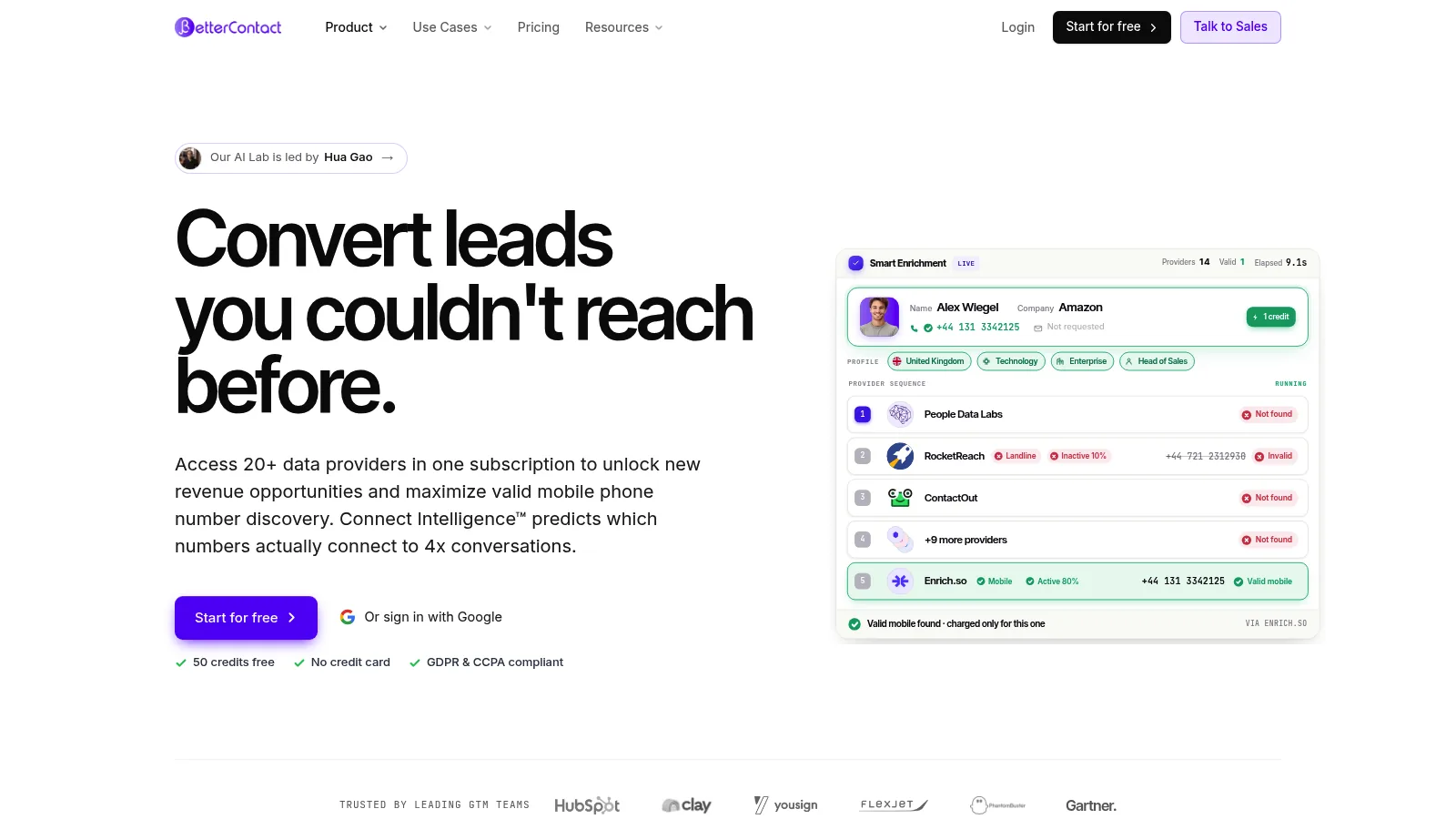
Overview: BetterContact runs the same model as FullEnrich: 20+ vendors on every plan, email verification by Bouncer included, and a charge only when the data is valid. It also offers a Lead Finder search and 28 native integrations, including Clay and Zapier.
Key features:
- Catch-all emails are free, so uncertain addresses don't eat credits.
- Its API comes on every plan, for teams moving a FullEnrich integration.
- Rollover is capped at twice the monthly subscription, and annual billing extends it to 12 months.
Pricing: Starter costs $15 a month for 200 credits and Pro $49 a month for 1,000. Enterprise starts at $799 a month above 20,000 credits, and annual billing gives two months free.
Pros: A lower entry price than FullEnrich, catch-alls not billed, 50 free credits with no card
Cons: On Pro and Enterprise, its optional Connect Intelligence scoring bills only the mobiles it rates likely to connect, while the page still lists a mobile at 10 credits, so test what share of your numbers count; bring-your-own vendor keys are Enterprise only; 200 credits on Starter is 20 mobiles
Where it fits: Teams happy with FullEnrich's model that want a smaller plan or another vendor mix.
Final verdict: The closest swap on this list, so test both on the same 200 rows and keep whichever finds more of yours.
3. Clay
Best for: Teams that want to choose every step.
Overview: Clay lets you build the waterfall yourself in a spreadsheet-style table: pick the vendors, set the order, and stop at the first verified hit. FullEnrich has been one of Clay's listed data providers since November 30, 2024, so it can stay as one step in your chain.
Key features:
- Your own vendor keys use one action and no data credit.
- An enrichment that returns no result costs neither data credits nor actions, per its FAQ.
Pricing: Clay's free plan comes with 500 actions and 100 data credits monthly. Launch is $185 on monthly billing, or $167 a month on an annual plan, and covers 2,500 data credits plus 15,000 actions each month.
Pros: Full control of order and vendors, your own keys accepted, a free plan to build on, though phone enrichment starts on Launch
Cons: Two meters to budget, actions and data credits; someone has to build and maintain the chain; data-credit cost varies by vendor, so price a sample table first
Why it made this list: You set the vendor order yourself, so your best vendor for each region can go first.
Final verdict: Worth it if you have an operator who enjoys building tables, and costly in time if you don't.
4. Apollo.io
Best for: Sales teams that also send outreach.
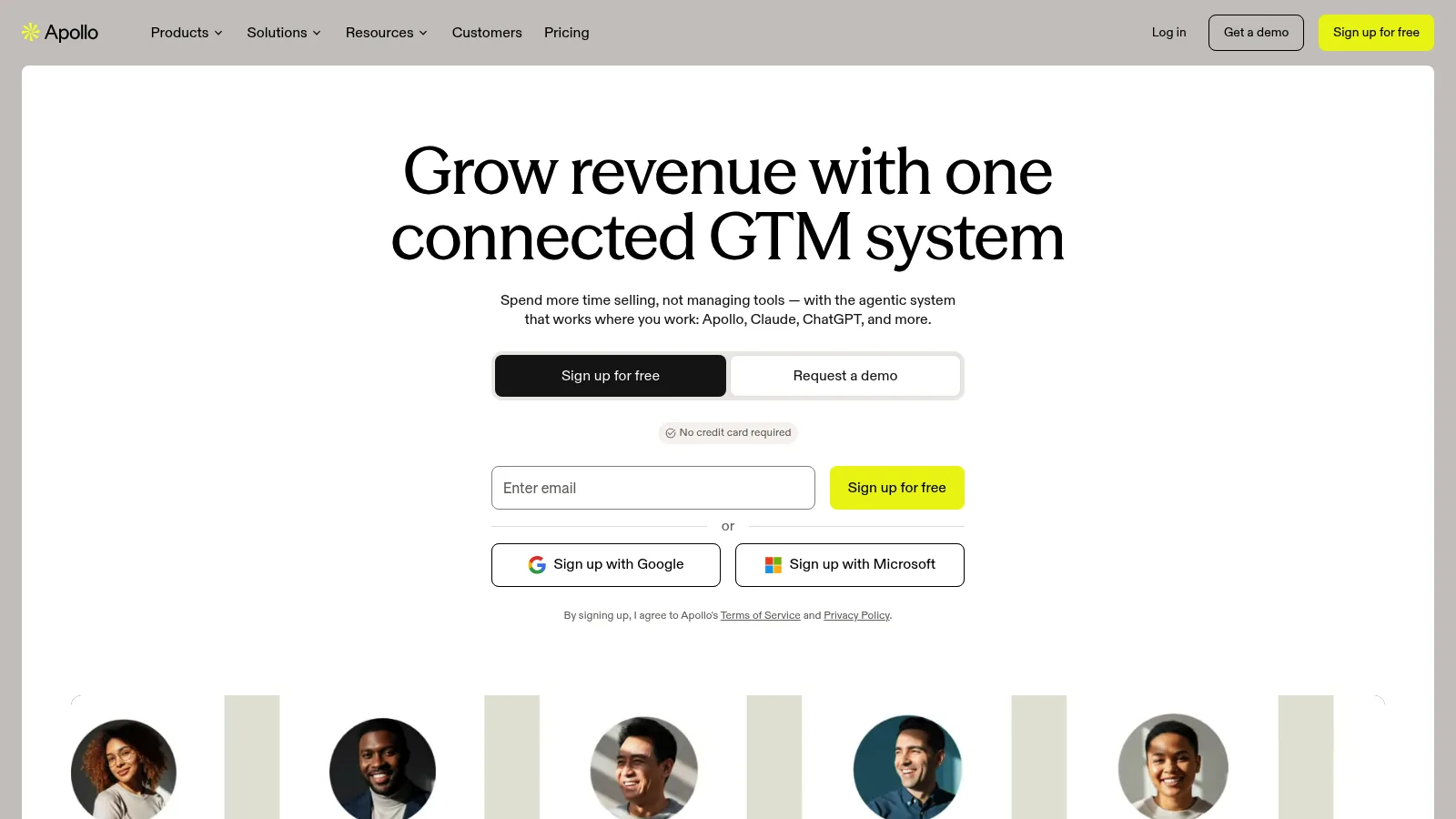
Overview: Apollo.io is a sales database with sequences and a dialer, and it includes "Waterfall Enrichment" on Basic and every plan above it. That answers the Reddit poster's wish for one platform, but its miss rules differ by route, and its seat pricing is why many teams also weigh Apollo alternatives.
Key features:
- Standard enrichment costs 1 credit per email and 8 per phone, billed only when found.
- Waterfall enrichment reaches past Apollo's own data when it misses.
Pricing: Basic is $65 a seat on monthly billing, or $49 a month per seat on an annual plan, with 2,500 credits a month. Professional is $99 or $79.
Pros: A low price per found mobile on standard enrichment, sending built in, a free plan
Cons: Waterfall enrichment typically uses 1 to 4 credits per email and 8 to 25 per phone, and some of its connected vendors charge for a lookup even when they find nothing; credits don't roll over; Apollo limits its plans to internal business use, and other use needs a separate agreement
Where it beats FullEnrich: One seat replaces FullEnrich plus the sequencer you'd send from.
Final verdict: A good trade for a sales team, as long as you watch which enrichment route each lookup takes.
5. LeadMagic
Best for: High-volume US mobile lookups.
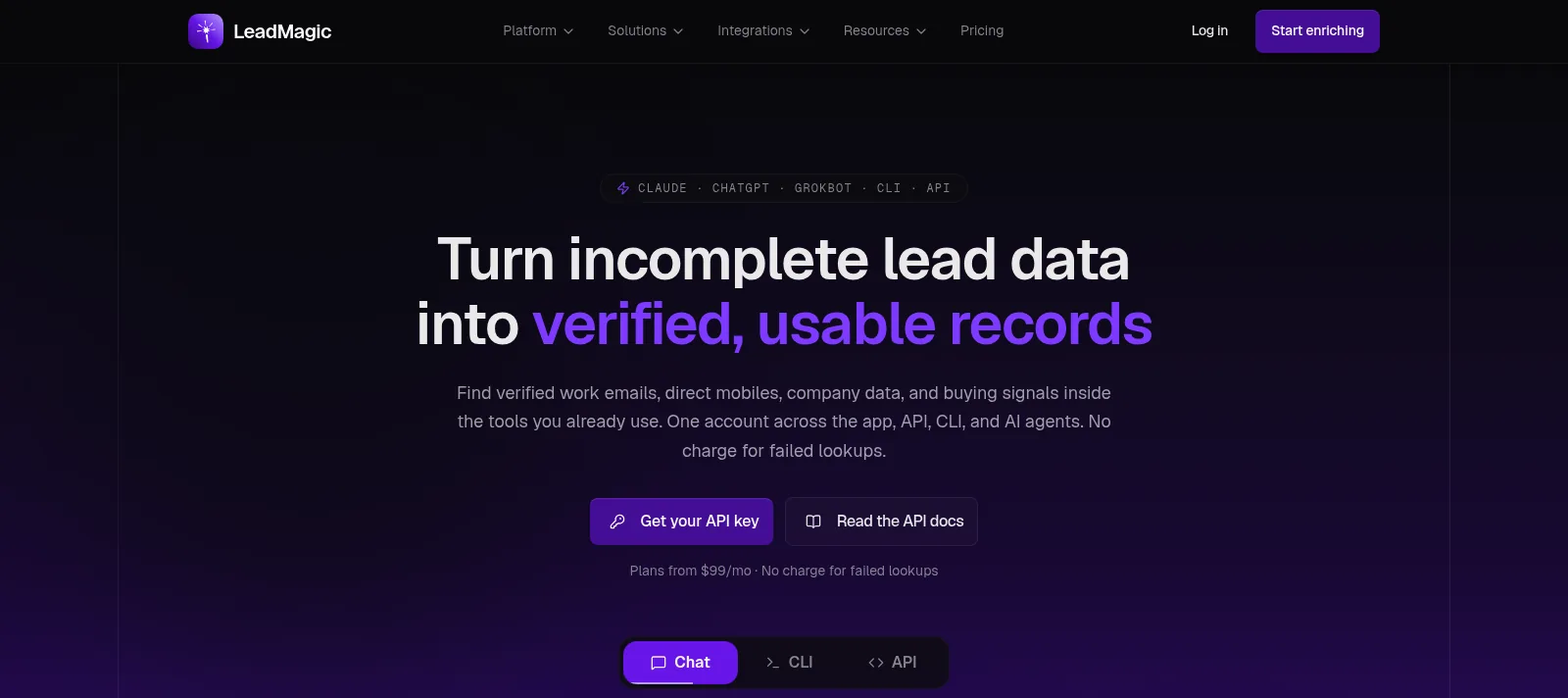
Overview: LeadMagic is a contact-data API that describes itself as an "enrichment layer" you add to waterfall tools such as Clay and Apollo, and you can call it directly instead. A mobile costs 5 credits against FullEnrich's 10, and its mobile finder page says coverage is strongest in the United States.
Key features:
- Failed lookups cost nothing, per its pricing page.
- The API, CLI and MCP come on every plan.
- Unused monthly credits can bank up to 2x the plan.
Pricing: Essential costs $99 a month for 5,000 credits, enough for about 1,000 mobiles, and Ultimate $849 for 100,000. Annual billing runs $990 to $8,490 a year.
Pros: The lowest price per found mobile here at list price, free misses, developer access on every plan
Cons: No free plan; its table builder is still in preview; a single vendor, so its misses stay missed unless you add another tool
Where it fits: US-heavy calling lists where a 10-credit mobile is the line you want to shrink.
Final verdict: Strong as a first step or a standalone finder for US mobiles; test it on your non-US rows separately.
6. Prospeo
Best for: Testing a finder before paying.
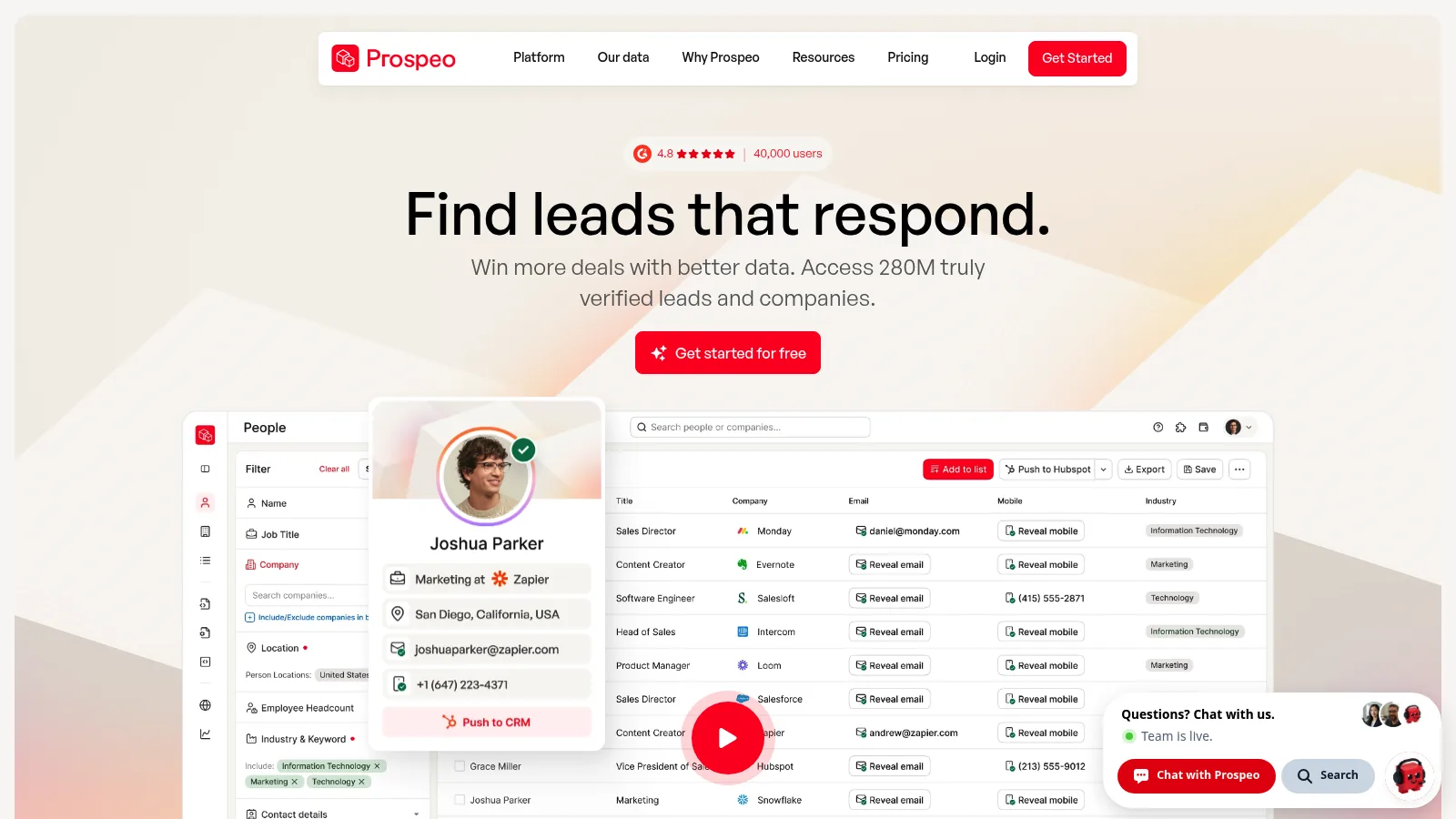
Overview: Prospeo finds verified business emails and direct mobiles from its own database, with people and company search on top. A mobile costs 10 credits, the same as FullEnrich, but its credit is cheaper at the entry tier.
Key features:
- Its free plan includes 100 monthly credits and MCP access.
- No charge when no result is found, per its API docs.
- Search filters build a list and enrich it in one place.
Pricing: Starter is $49 a user a month on monthly billing or $37 on yearly billing, with 2,000 credits a month. Growth costs $99 or $74 for 5,000.
Pros: A free monthly allowance, published prices, emails and mobiles on one credit pool
Cons: No API on the free plan; prices are per user, so a team multiplies them; its rollover wording varies between page loads, so confirm it at checkout
Why it earns a place here: You can test a single finder against FullEnrich's waterfall on your own records.
Final verdict: Run 100 emails on the free plan, then decide whether the misses justify a waterfall.
7. Datagma
Best for: European phone numbers.
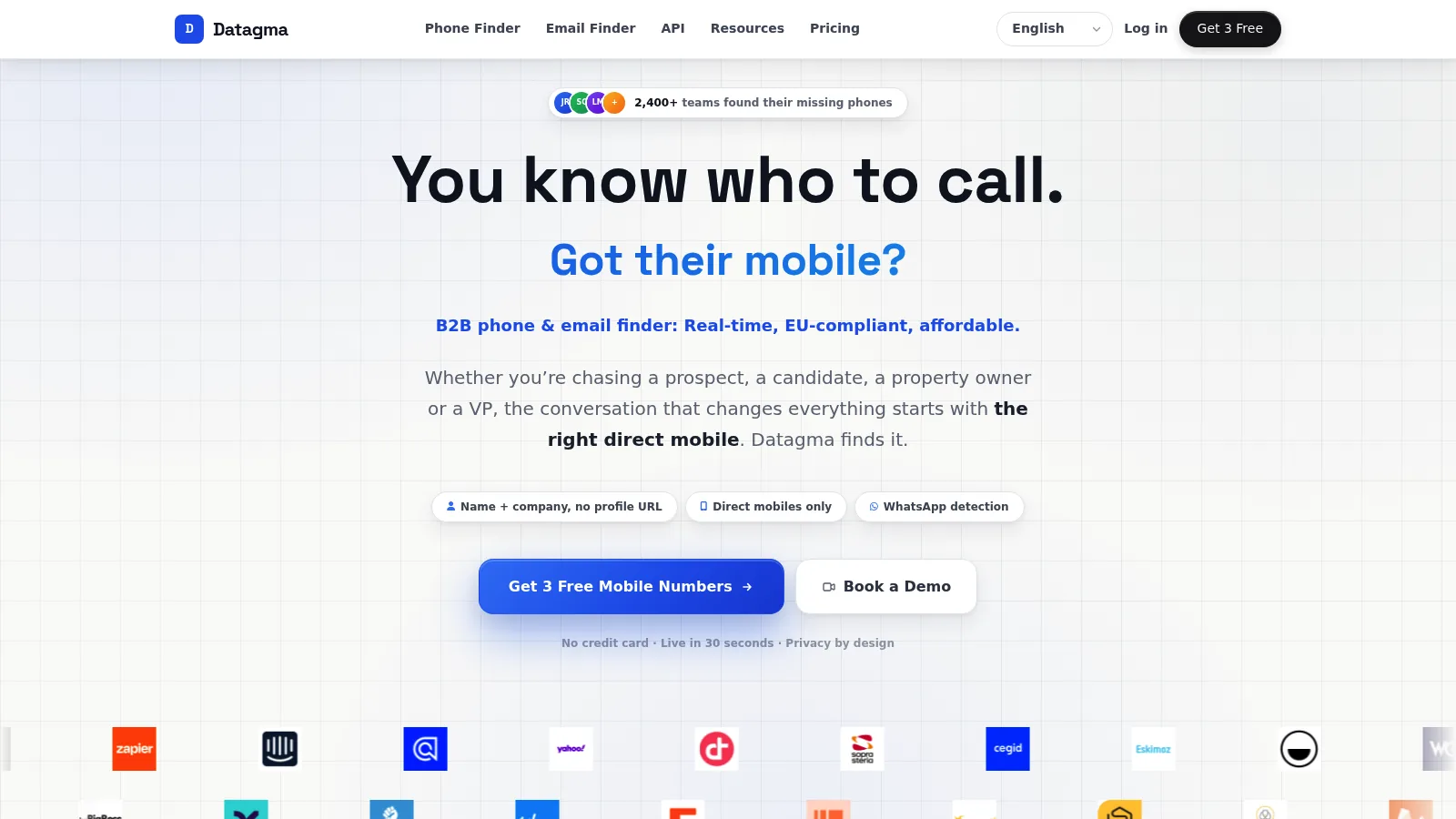
Overview: Datagma is an enrichment tool that markets premium EMEA and APAC coverage, with a focus on European phones. Emails cost 1 credit, a mobile costs 30, and a lookup with no match costs nothing.
Key features:
- Catch-all emails are free.
- Credits roll over up to 12 months on paid plans.
- The API is on every plan, and plans run month to month with no contract.
Pricing: Regular costs $49 a month on monthly billing, or $39 annually, for 3,000 credits and one seat. Popular costs $99 or $79 for 7,500 credits and three seats.
Pros: Cheap emails, long rollover, 100 free credits monthly
Cons: A mobile costs 30 credits, $0.49 at Regular; seats are limited to 1, 3 or 5 per plan, with extra seats at $5 a user a month; its regional claims are its own
Why buyers shortlist it: Teams calling into Europe can test whether its phones justify the 30-credit rate.
Final verdict: Worth a trial for European mobiles, if coverage there justifies paying more than LeadMagic or Prospeo.
8. Lusha
Best for: Occasional manual lookups.
Overview: Lusha is a contact database with a web app and an API on every plan. It charges 1 credit per email and 5 per phone, but its docs disagree on empty API requests: an older pricing guide sets a minimum of 1 credit per request, while the V3 billing FAQ says a request with no match isn't charged. That gap matters most at API volume, where teams often compare Lusha alternatives first.
Key features:
- The web app doesn't charge for a miss.
- A phone costs 5 credits.
- Monthly plan credits bank up to twice the allowance.
Pricing: Starter costs $49.90 a month on monthly billing for 400 credits. Yearly billing brings it to $37.45 a month, for 4,800 credits across the year. Pro costs $69.90 monthly or $52.45 yearly, with two seats.
Pros: 40 free credits monthly, an API from the free tier
Cons: API billing on a request that finds nothing is documented two ways, so test it before scaling; annual credits don't roll over; the per-email price is the highest on this list
Where it fits: Reps who look up a few contacts a day in a browser.
Final verdict: Fine for light use; at volume, start with the finders above it.
What You Pay per Found Email and per Found Mobile
Here is the arithmetic that credit prices hide: plan price divided by credits, times the credits each contact costs. We calculated it from each vendor's published prices on November 2, 2026.
| Option (billing basis) | Mobiles the plan buys | Per work email found | Per mobile found |
|---|---|---|---|
| Reverse Contact, 5,000-credit pack, $100 once | 250 phones | $0.060 | $0.40 per phone |
| FullEnrich, 500 credits, $29 monthly | 50 | $0.058 | $0.58 |
| FullEnrich, 6,000 credits a year, $312 annually | 600 a year | $0.052 | $0.52 |
| FullEnrich, 100,000 credits, $3,500 monthly | 10,000 | $0.035 | $0.35 |
| BetterContact Starter, 200 credits, $15 monthly | 20 | $0.075 | $0.75 |
| BetterContact Pro, 1,000 credits, $49 monthly | 100 | $0.049 | $0.49 |
| Apollo.io Basic, 2,500 credits, $65 a seat monthly | 312 a seat | $0.026 | $0.21 |
| LeadMagic Essential, 5,000 credits, $99 monthly | 1,000 | $0.020 | $0.10 |
| Prospeo Starter, 2,000 credits, $49 a user monthly | 200 a user | $0.025 | $0.25 |
| Datagma Regular, 3,000 credits, $49 monthly | 100 | $0.016 | $0.49 |
| Lusha Starter, 400 credits, $49.90 monthly | 80 | $0.125 | $0.62 |
Start with our row: an email costs $0.060, the third-highest here, and a lookup that finds a direct or mobile phone costs $0.40, where FullEnrich charges nothing when it finds only a landline. Clay is left out because its cost per contact depends on the vendors you choose.
Three caveats keep the table honest. Apollo.io's waterfall can bill misses and typically spends 8 to 25 credits a phone, up to $0.65 at Basic, and Lusha's docs disagree on empty API requests, so both may run higher. And BetterContact's figures assume every found mobile bills; on Pro and up, its scoring bills only those it rates likely to connect.
A price per found mobile is also not coverage: a tool at $0.10 that finds fewer numbers leaves you paying a rep to hunt for the rest. Each miss sends a rep back to the manual steps for finding a phone number from an email.
So divide cost by usable contacts, not by credits. Say a waterfall finds mobiles for 600 of 1,000 records at $0.58 each, or $348 in credits, and a standalone finder finds 400 at $0.10 each, or $40 in credits. If each missing mobile costs a rep 10 minutes, the extra 200 misses cost 2,000 minutes, about 33 hours. At almost any loaded hourly rate, that's more than the $308 in credits you saved.
When a Waterfall Earns Its Price, and When One Vendor Is Enough
A waterfall asks vendor A for an email, then vendor B if A comes back empty, then C, until one returns a result that passes verification. You pay for the hit, not the attempts. Whether that's worth a premium depends on one question: do the vendors in the chain actually know different things?
In one Reddit thread asking whether waterfall enrichment is worth it, several commenters doubted that the vendors in a chain hold different data. One said returns fade after two or three vendors because most pull from overlapping databases. Another said a waterfall works only when the vendors aren't pulling from the same upstream source. Others in the thread reported real lift. These are anecdotes, but they match older research.
In a peer-reviewed PVLDB study of 877 online bookstores, Dong, Berti-Equille and Srivastava (2009) showed that a wrong value spreads when sources copy each other. Taking the most-copied stores' majority answer was right only 58% of the time. The paper is about book data, not B2B contact vendors, but the principle carries: ten sources that copy one another are closer to one source than to ten.
Verification is the other half of what a waterfall sells. FullEnrich's homepage says 31.53% of the data it buys fails its verification, and BetterContact's homepage says 36.3% of provider data fails its checks. Both bill only for what survives, so part of the fee pays to reject roughly a third of what they pull from providers, using the syntax, domain and mailbox checks that email verification tools also sell on their own.
Buyers on our sales calls split on waterfalls too. Mature data teams expect no single vendor to be perfect, so they buy from several and keep the freshest, most complete record per person.
One data lead at a B2B sales-intelligence platform told us, "If every vendor just provided good data, or whichever vendor we pick provided like absolutely greatest data, we would even stick with single vendor." An early-stage startup co-founder told us the cost: testing and integrating several vendors with different formats is a nightmare.
A waterfall usually earns its price when these hold:
- Your list mixes regions, and vendors' coverage differs by country.
- You need mobiles for calling, where a single vendor's misses hurt most.
- A missed contact costs a rep real time, so a higher price per hit still costs less overall.
- You can't staff the testing and contracts behind several vendors yourself.
When none of those apply, one good vendor tested on your own list is often enough. Either way, the money at stake is larger than the credit price suggests. In MIT Sloan Management Review, Thomas Redman put the cost of bad data at 15% to 25% of revenue for most companies, an estimate rather than a measurement. Pay for the checks that keep wrong records out, whichever model delivers them.
Pros and Cons of Switching From FullEnrich
Switching to FullEnrich alternatives wins when FullEnrich's general-purpose chain prices your list badly. A US-heavy calling team can pay under a fifth of FullEnrich's entry price per mobile at LeadMagic. A team already living in Clay can drop a subscription and run its own chain.
Switching loses when you value what FullEnrich bundles: one bill across many vendors, free landlines, unlimited users and the 12-month rollover on annual plans. A standalone finder can also miss contacts FullEnrich would have found further down its chain, and on a list spanning several countries that loss can outweigh any saving.
How to Move Off FullEnrich Without a Coverage Gap
The safest switch runs both tools side by side before your next renewal:
- Export your last 90 days of FullEnrich results, including the rows where it found nothing.
- Pick 200 rows with known answers, split across your main regions and seniority levels.
- Run the same 200 through FullEnrich and the candidate in the same week, so neither gets fresher data.
- Mark every row found, wrong (a bounce or a dead number) or missing, and count wrong answers separately from misses.
- Work out cost per usable contact for each tool from those counts, not from the vendor's find rate.
- Rewire your integration: FullEnrich's HubSpot app or API calls move to the new tool's API, Zapier or Make.
- Time the cancellation so you've used the credits you already paid for, which roll over 3 months on monthly plans and 12 on annual.
Step 6 hides most of the work: if the new tool answers asynchronously, your code needs a webhook endpoint or a polling job, so build that before you cancel anything.
Mistakes to Avoid When Comparing Waterfall Tools
When you compare FullEnrich waterfall enrichment alternatives, the most common mistake is trusting a find rate from a page selling the tool. FullEnrich's homepage claims an 80%+ find rate. Pipecorn, a rival waterfall, measured 71% valid-email coverage for FullEnrich on 567 leads, and 60% on CRM records 6 to 12 months old. Anymail Finder, a rival email finder, gave FullEnrich the highest coverage in its own 5,000-contact test, at 87.1%.
All three figures come from vendors, on different lists, and none of them used yours.
Other mistakes cost money more quietly:
- Counting vendors in a waterfall as if each added new data, when several may share a database.
- Comparing price per credit instead of price per found contact, which hides a 30-credit mobile.
- Ignoring the miss rule, so a waterfall or API that bills on a miss looks cheaper than it is.
- Testing only on clean, recent records, when your real list is older and messier.
- Comparing a per-seat price with a per-account price, or annual billing with monthly.
A test on your own older records, priced per usable contact on one billing basis, exposes all five.
How to Choose the Right FullEnrich Alternative
You rarely have to replace the whole waterfall. One lead-generation agency told us it prefers to keep its waterfall template and slot a new provider in for any that have become too expensive. If you do replace it, match FullEnrich competitors to the job:
- Keep FullEnrich's model with a smaller entry plan: BetterContact.
- Choose your own vendors and their order: Clay.
- Put data and outreach in one seat: Apollo.io.
- Cut the cost of US mobiles: LeadMagic.
- Test a standalone finder for free first: Prospeo.
- Call into Europe: Datagma.
- Check a handful of contacts a day by hand: Lusha.
- Build contact and profile lookups into your own product: Reverse Contact.
The last case is a different decision. A team putting a data enrichment API inside software its customers use cares about response shape, async delivery and resale rights as much as find rate, so weigh those before price.
Run One Side-by-Side Test Before You Cancel
Don't switch on a pricing page. Run the side-by-side test above with one or two tools from this list, and let cost per usable contact decide.
If a cheaper finder wins on your main region, keep FullEnrich for the rest or let a waterfall call the cheaper vendor first. And if you're building contact data into a product, try our API on your records with free trial credits, no card required.
FAQs
What are the best FullEnrich alternatives?
The best FullEnrich alternatives depend on what you want to change. BetterContact is the closest like-for-like waterfall with a $15 entry plan, Clay lets you build your own chain, and LeadMagic has the lowest price per found mobile here. For contact data inside your own product, we'd point you to Reverse Contact's API.
How does FullEnrich's waterfall enrichment work?
FullEnrich asks a chain of data vendors, 25+ sources by its pricing page and 20+ vendors by its homepage, for a work email or mobile in turn. It checks each email's syntax, domain and mailbox, carrier-checks mobiles, and bills only for data that passes.
How much does FullEnrich cost?
On monthly billing, Pro starts at $29 a month for 500 credits and tops out at $3,500 a month for 100,000; above that, you talk to sales. Annual billing is about 10% cheaper, from $26 a month for 6,000 credits a year. A work email costs 1 credit and a mobile 10.
Do more data vendors always find more contacts?
No. A vendor adds contacts only if it holds data the others lack, and vendors that share a database mostly return the same hits. Test whether each added step finds contacts the earlier ones missed.
Which FullEnrich alternatives charge nothing when a lookup finds nothing?
Six of the eight FullEnrich alternatives publish that rule: Reverse Contact (for email and phone lookups), BetterContact, Clay, LeadMagic, Datagma and Prospeo. Apollo.io's standard enrichment is free on a miss but its waterfall can bill, and Lusha's docs disagree on whether an empty API request costs a credit.
The data layer behind your GTM engine
Access fresh people and company data through one API and power every enrichment, prospecting, and automation workflow.
- Profiles
- 800M+
- Refreshes / month
- 200M
- Response time (P95)
- 500ms