
11 Best Email Finder Tools in 2026, by Published Match Rate
Julien K.Published
Key takeaways:
- Four of these 11 vendors publish a find rate, the share of contacts that come back with an email: Reverse Contact (93%), Anymail Finder (86.4%), FullEnrich (80%+) and Icypeas (79%). Every one is self-reported, ours included.
- A find rate and an accuracy rate are different numbers that pull against each other. In Anymail Finder's own 14-tool benchmark, the tool with the highest accuracy (99.1%) found emails for 49.0% of contacts.
- Amazon SES automatically puts an account under review at a 5% bounce rate and may pause sending at 10%, so the bounce side matters as much as the find side.
- Anymail Finder, Apollo.io and Findymail each pair their number with a credit refund on bounced emails. Whatever you pick, test it on 100 contacts you already have right answers for.
Email finder tools all promise the same thing: give them a name and a company, and they hand back a work email. They split on the number each one prints to prove it.
Buyers we talk to want one coverage percentage before they commit, and in the same breath admit it changes by country and industry. The second half is the part to plan around.
This list covers 11 email finder tools and the figure each vendor publishes about itself, read on the vendors' own pages on October 7, 2026. No figure here comes from a test of ours. Reverse Contact sits at #1 as our own product, so read that entry with care.
The 11 Best Email Finder Tools Compared
Here's the lineup in list order, with each vendor's lowest price and its own figure. MCP, in a few rows, is the standard way AI agents call outside tools.
| Tool | Best for | Key features | Main limitation | Pricing (from) | Published figure (what it measures) |
|---|---|---|---|---|---|
| Reverse Contact | Verified work emails at API scale | Pay only when found, CSV, API and CLI | No free plan; plans don't include email lookups | 3 credits per found email ($9 per 1,000 credits at 200K); plans from $249/month exclude email lookups | 93% (find rate) |
| Anymail Finder | Email-only finding with a refund | Bounce refund, API on every plan, bulk jobs by webhook | Email only, no phone numbers | $19/month billed yearly (4,800 credits a year); $29 monthly | 86.4% (find rate) at 98.9% accuracy, own test |
| FullEnrich | A ready-made multi-vendor waterfall | Personal emails, mobiles, MCP | No published bounce guarantee | $26/month billed annually; $29 monthly (500 credits) | 80%+ (find rate) |
| Icypeas | Low-cost finding when volume comes in bursts | Credits that never expire, API and MCP | Phone finder "coming soon" | About $15.83/month billed yearly; $19 + VAT monthly (1,000 credits) | 79% (find rate) and 1.33% bounce, own test |
| Findymail | A written bounce ceiling | Bounce refund, rollover credits, no seat fees | Publishes no find rate | $41/month billed yearly, $49 monthly | <5% bounce guarantee |
| ContactOut | Personal emails as well as work | Work and personal emails, daily free allowance | No method behind 99% or 75% | Free (5/day); $49/month billed annually | 99% (accuracy/confidence claim), 75% (reach claim) |
| Snov.io | Finding plus outreach on a small budget | Unlimited seats, renewing trial credits | No test details behind its 98% | Free trial; $39/month | Over 98% (accuracy) |
| Apollo.io | Finding and sending in one account | Free plan, 30-day bounce refund, sequences | Several different accuracy figures | Free; $49/seat/month billed annually | 98% (email accuracy); 84% undefined "match rate" |
| Prospeo | Recurring free credits | 100 free credits a month, cheap top-ups | Priced per user, no rollover | Free; $37/user/month billed yearly | 98% (accuracy, all data fields) |
| RocketReach | Emails and phones per seat | Refunds empty lookups, API on paid tiers | Phones only on Pro ($75/month billed annually) | Free (5 lookups); $33/month billed annually | 90-98% (deliverability of verified emails) |
| Hunter.io | Free, low-volume finding with confidence scores | Confidence score per email, API on free plan | Publishes no match or accuracy rate | Free; $34/month billed yearly | None for finding; <1% observed bounce on verified-valid addresses |
Every figure in the last column is the vendor's own claim, measured its own way. If you only read the table, these shortcuts match common jobs:
- For cold email from your own domain, start with Findymail or Anymail Finder, which back their numbers with bounce refunds.
- For finding and sending in one tool, look at Apollo.io.
- For steady free use, Hunter.io and Prospeo both renew credits every month.
- For personal addresses alongside work ones, ContactOut returns both in one search.
- For email lookups built into code or an AI agent, Reverse Contact bills per email found.
Test your pick on your own list before buying.
How We Ranked the Best Email Finder Tools
We put Reverse Contact at #1 since it's our own product. The other 10 sit in groups by the kind of figure they publish: find rates first, because buyers usually ask first how many emails they'll get, then a bounce guarantee, then accuracy and deliverability claims, and last a vendor that publishes no rate for finding.
Every tool here goes from a name to an email. Going the other way, from an address back to its owner, is a reverse email lookup, a separate job we left out.
Within each group, we list vendors by the figure they publish. A bigger self-reported number earns a higher slot here, not a verdict that the tool finds more on your list. We weighed five things for every tool:
- What the published number measures, and whether the page says how it was measured
- Whether you pay for lookups that find nothing
- Whether credits come back when an email bounces
- The lowest paid plan and its billing basis
- Whether there's an API and a way to run a whole file at once
Treat the order as a guide to each vendor's claim, then check it on your contacts.
Email Finder Tool Reviews
Reviews follow the list order.
1. Reverse Contact
Best for: Verified work emails at API scale
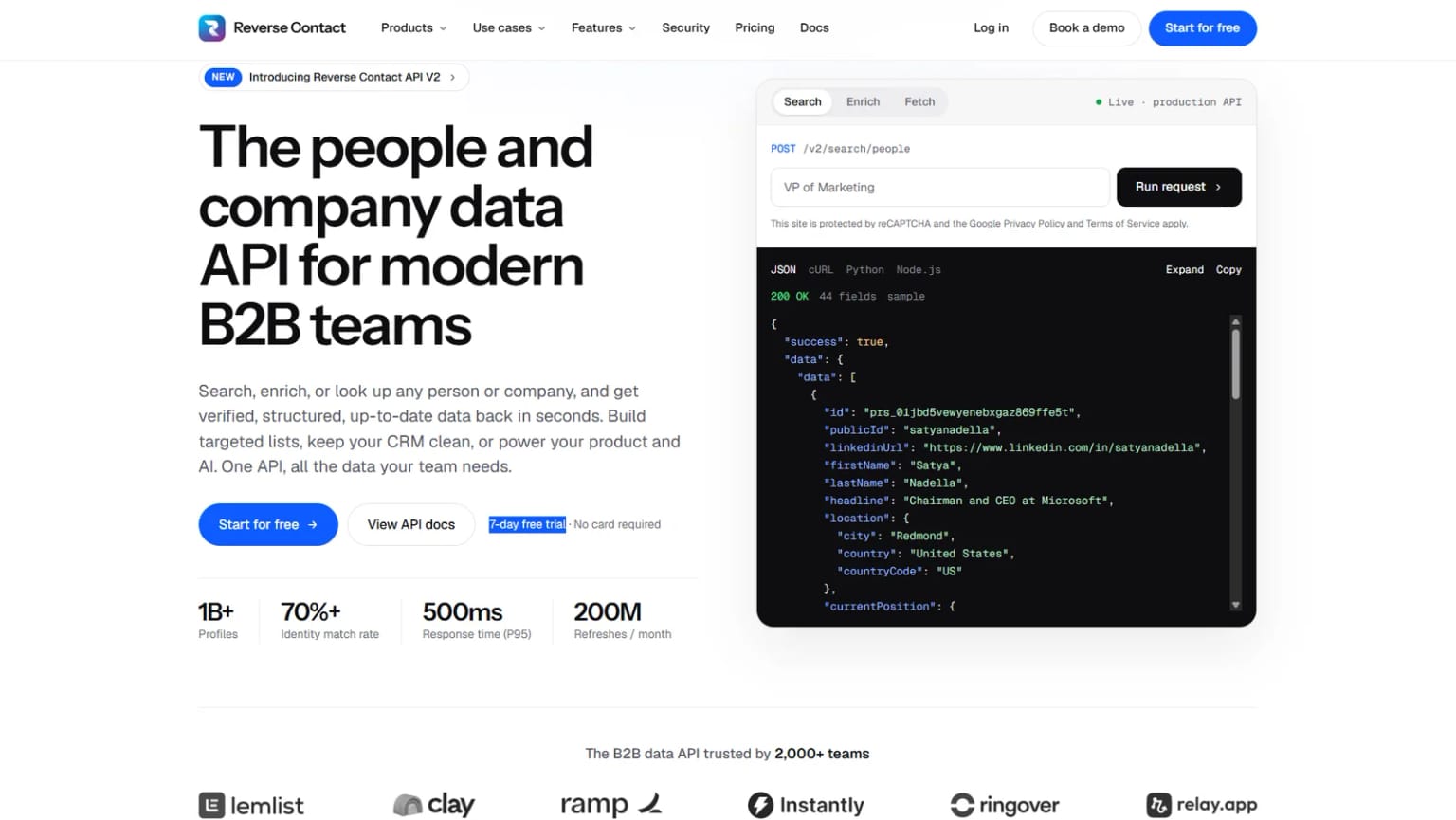
Overview: Reverse Contact's email finder is one endpoint in a larger people and company data API. You send a first name, last name and company domain to /contact/email, and the address comes back by webhook (a URL on your side that receives the result) or by polling (your code checks back for it).
Before it reaches you, each address is checked at the moment you ask rather than trusted from an old lookup: syntax, then the domain's mail (DNS and MX) records, an SMTP check with the mail server, catch-all detection, and disposable and role-based filtering. One that fails doesn't come back.
As for how often an address comes back, we publish a 93% match rate for our email finder API, measured on what the page calls tested market data: a worldwide sample of B2B contacts we knew were real, spread across job functions, seniority levels, industries and locations. Read it as a clean-input result, since the same page says real results vary by segment, region and company size.
The same API also works the other way round, and Ringover is the example: it runs a reverse lookup on each new signup's work email, name and company, and about 60-65% of its inbound leads get qualified automatically, with the rest sent a longer form.
Key features:
- 3 credits per email found and zero for a miss, so a hard segment costs time, not budget
- Webhooks, so a big job never holds a connection open
- One JSON format whether you call the API, upload a CSV, run
rc contact emailin our CLI or use Make's generic API call
Pricing: Email lookups cost 3 credits per email found. At the 200,000-credit point on our pricing slider, credits cost $9 per 1,000, about 2.7 cents per found email.
Plans run Go at $249 a month, Plus $449 and Max $699. Their unlimited allowances cover profile lookups by URL or ID, search and (on Max) enrichment, never email lookups. Plans are for your own team; embedding our data in something you sell takes a Platform contract, priced on a call with sales.
Pros: No charge when no email is found, a stated test basis for the 93%, though no sample size, bulk CSV jobs without code
Cons: No free plan, only free trial credits with no card required; email lookups always use credits
How to start using it:
- Register for free trial credits and copy your API key.
- Pull 100 CRM contacts whose emails you know are right.
- Run their names and domains through the endpoint and compare the results.
- Move the full list to CSV enrichment or a webhook pipeline.
Why it's a good email finder tool: You pay only when a verified email comes back. Our 93% is self-measured on clean input, so test it hardest on contacts whose emails you know.
Final verdict: Reverse Contact fits teams that want email finding inside their own workflow, CRM sync or agent, billed per result. For a point-and-click app with a free monthly allowance, look further down.
2. Anymail Finder
Best for: Email-only finding with a refund
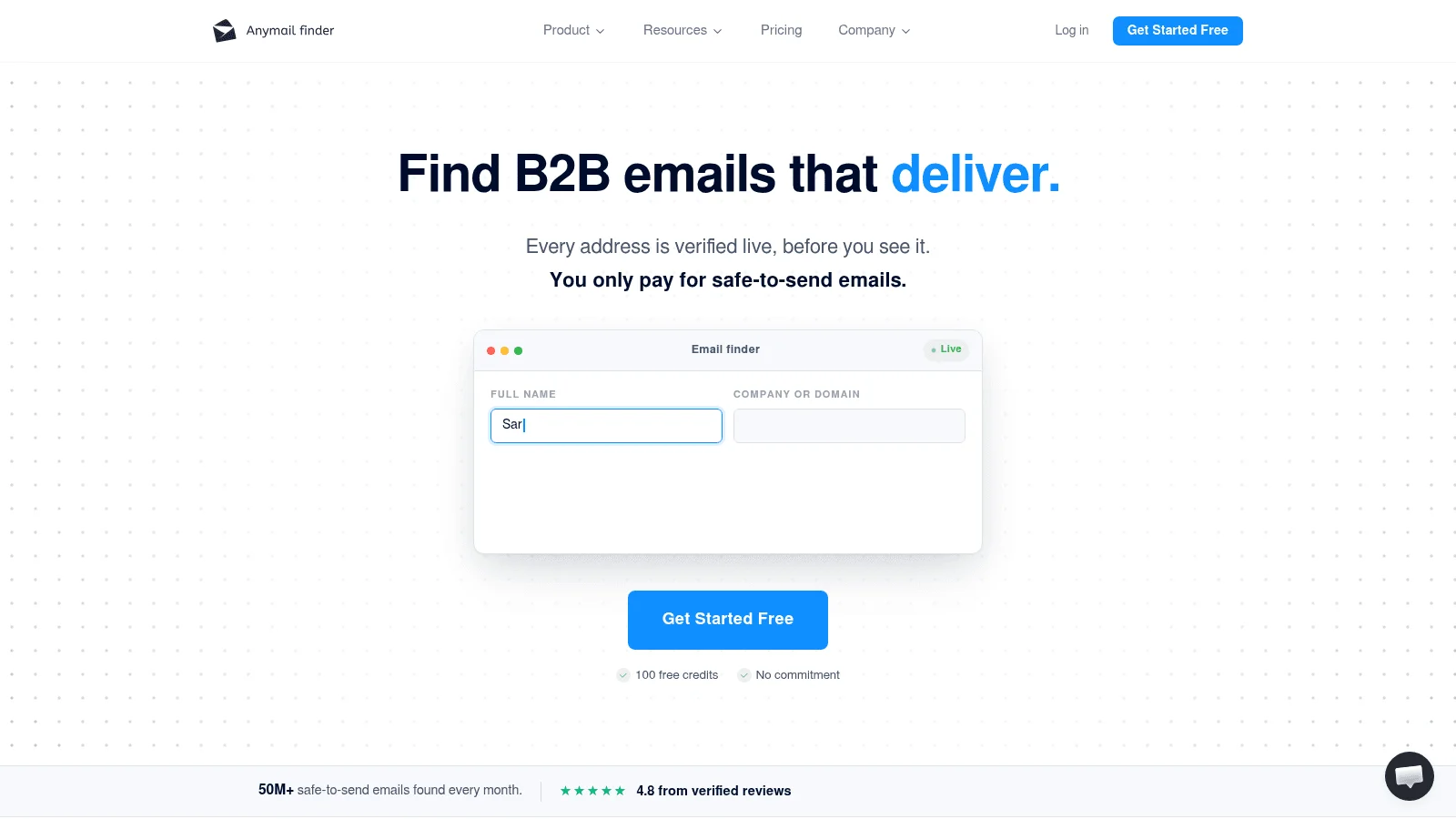
Overview: Anymail Finder finds work emails and no phone numbers. In a 14-tool benchmark it ran on 5,000 B2B contacts, it reports "86.4% verified coverage at 98.9% accuracy."
Key features:
- Charges only when a verified email comes back
- A "97%+ delivery guarantee" with credits refunded on bounces after review
- API on every plan, plus bulk jobs delivered by webhook
Pricing: Plans start at $29 a month for 400 credits before tax, or $228 a year for 4,800 credits, about $19 a month. New accounts get 100 free credits once, after an uncharged card check.
Pros: Bounce refunds, credits roll over while subscribed, benchmark method published
Cons: Email only, self-run benchmark, decision-maker searches cost 2 credits
What its number means: The 86.4% is a find rate and the 98.9% an accuracy rate from one test, so you see both sides of the trade-off. Anymail Finder ran it, so treat it as a strong claim, not an audit.
Final verdict: Pick it for email-only finding with a refund behind the number.
3. FullEnrich
Best for: A ready-made multi-vendor waterfall
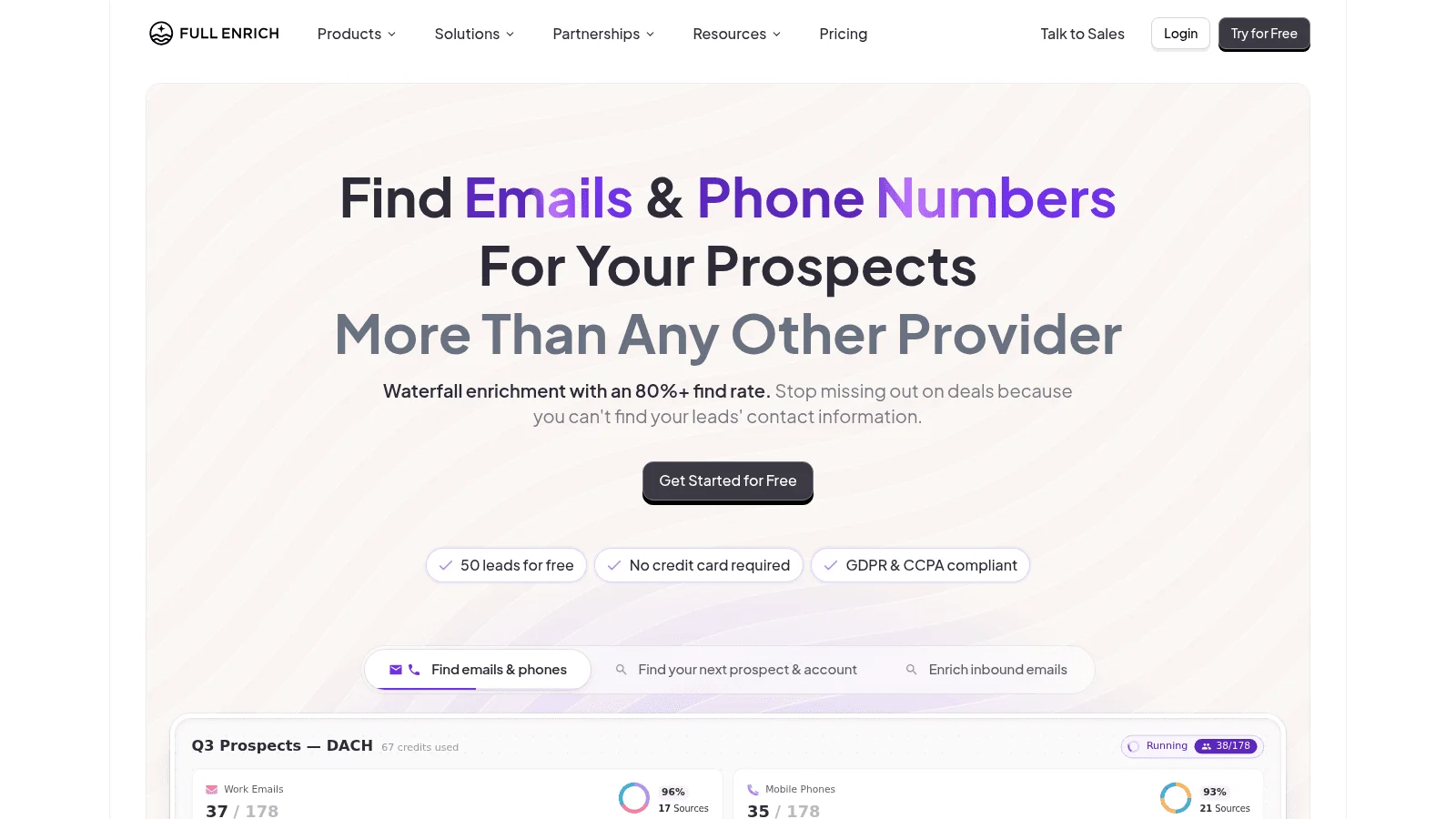
Overview: FullEnrich queries 25+ data vendors in turn until one returns a result. It publishes an "80%+ find rate" and says "31.53% of the data we buy fails our verification," a rare look at how much bought data fails a vendor's own checks.
In Anymail Finder's 14-tool benchmark, FullEnrich came out at 87.1% coverage, above both its own figure and Anymail Finder's 86.4%. It sits third because this list follows vendors' own numbers.
Key features:
- Work emails, personal emails and mobiles from one credit balance
- API and MCP on every tier, trial included, with unlimited users
- Charges only for data it finds
Pricing: Pro is $29 a month for 500 credits on monthly billing, or $26 a month billed annually, after a 50-credit trial with no card. Each work email uses 1 credit, while personal emails take 3 and mobiles 10.
Pros: Published find rate, publishes its rejection rate, personal emails
Cons: No published bounce guarantee, personal emails cost triple, 10-credit mobiles
Why it's a good email finder tool: An 80%+ find rate from one subscription saves you building and maintaining your own waterfall.
Final verdict: Choose FullEnrich for waterfall coverage without stitching vendors together yourself.
4. Icypeas
Best for: Low-cost finding when volume comes in bursts
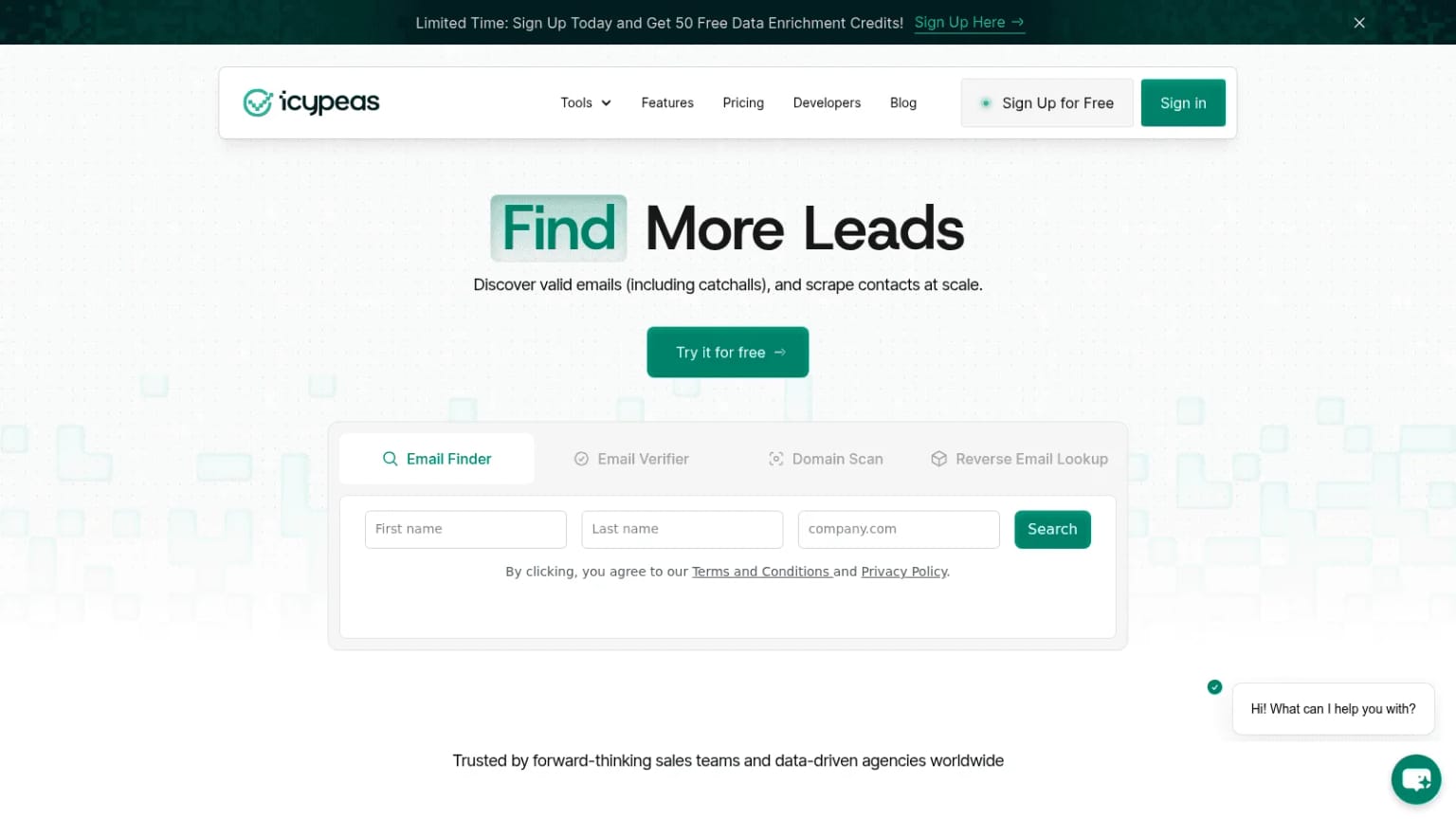
Overview: Icypeas ran its own benchmark on 300 prospects and 536 sent emails, and it reports a 79% find rate plus a 1.33% bounce rate it calls the lowest in its test.
Key features:
- 1 credit per found email, 0.1 per verification
- API and MCP on every tier
- Credits that never expire
Pricing: Basic costs $19 a month plus VAT for 1,000 credits, or $190 a year (about $15.83 a month). New signups get 50 free credits for a limited time, but there's no free plan.
Pros: Low entry price, no expiry, bounce rate published beside the find rate
Cons: Phone finder "coming soon," a small sample, no published bounce refund
What its number means: The 79% is a find rate and the 1.33% a bounce rate from real sends, a more direct test than verifier checks. With 300 prospects, though, one odd segment can swing it. Anymail Finder's benchmark measured Icypeas at 49.0% coverage, though at the highest accuracy in that test.
Final verdict: Icypeas suits budget teams that will confirm the 79% on a bigger slice of their list.
5. Findymail
Best for: A written bounce ceiling
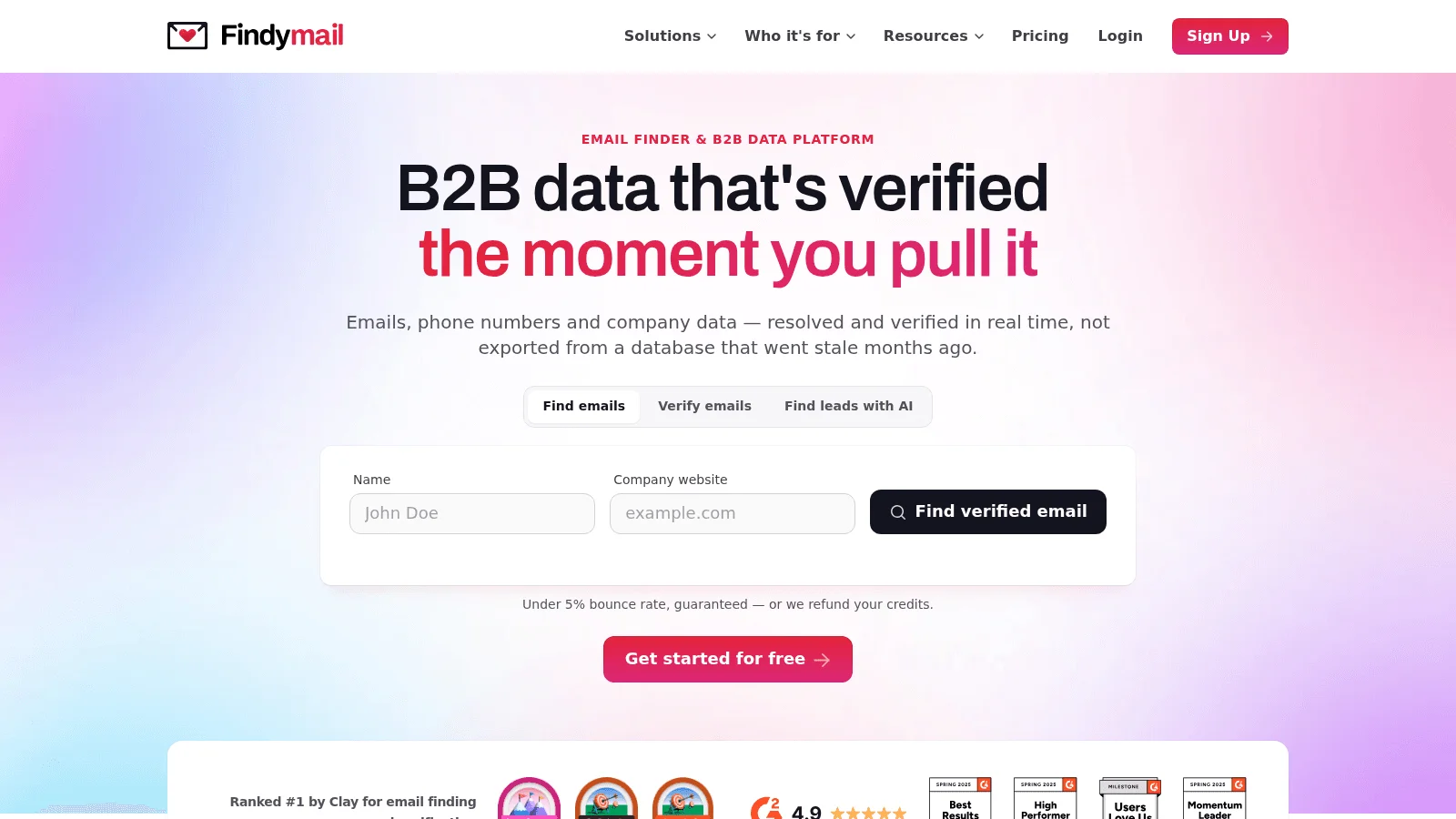
Overview: Findymail publishes no find rate. It publishes a promise: "Guaranteed <5% bounce rate. If your bounce rate exceeds 5%, we refund your credits." It also finds mobile numbers outside the EU.
Key features:
- A bounce guarantee at 5%, the rate at which Amazon SES automatically puts a sender account under review
- No charge for misses, with rollover up to 2x your plan
- API on all plans, with one shared account instead of seat fees
Pricing: Basic is $49 a month, or $41 a month billed yearly, for 1,000 credits. Each email found uses 1 credit, each phone number 10.
Pros: Clear bounce guarantee, rollover credits, no seat fees
Cons: No find rate, non-EU mobiles only, the lower price needs a yearly plan
Where it wins: The guarantee caps your bounce rate at the point where Amazon SES starts a review, and refunds credits if it's crossed. It won't undo a review, so treat it as a ceiling on spend, not on risk.
Final verdict: Findymail suits cold email teams that want a written bounce ceiling behind their spend.
6. ContactOut
Best for: Personal emails as well as work emails
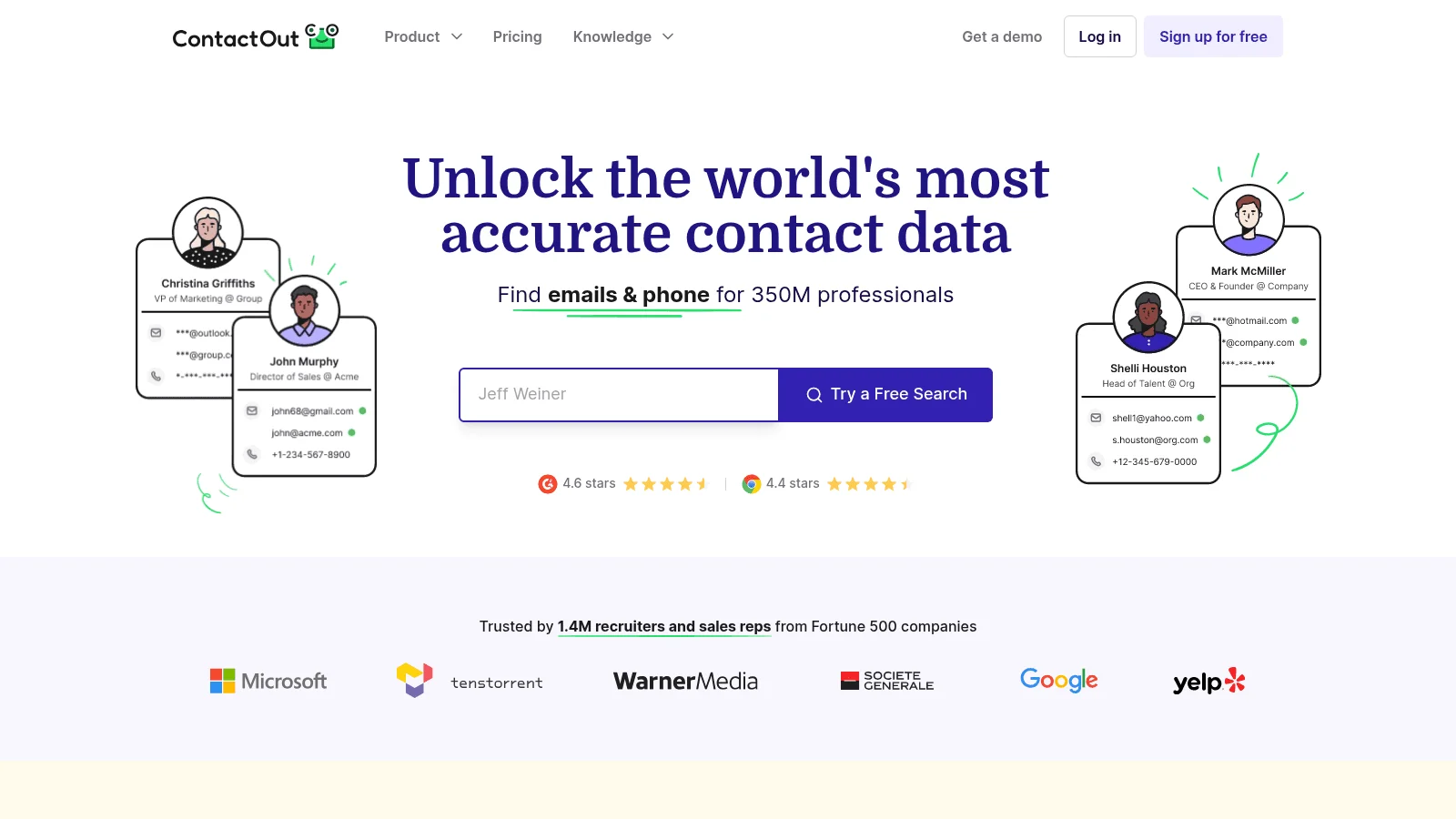
Overview: ContactOut returns work and personal emails plus phone numbers. It makes a 99% accuracy/confidence claim for "Triple-verified" results and claims email and phone numbers for "75% of people online," without publishing how either was measured.
Key features:
- Work and personal emails in one search
- 5 free emails, phones and exports a day, "limited time only"
- Team and API plans on request
Pricing: The Email plan is $49 a month billed annually, and Email + Phone is $99 on the same basis, both for one user. Its terms cap "unlimited" at 2,000 email and 1,000 phone credits a month.
Pros: Personal emails, a daily free allowance, phones on the higher plan
Cons: No method behind the 99% or 75%, capped "unlimited," API on request only
Where it wins: Among personal email finder tools, it returns work and private addresses in one search.
Final verdict: ContactOut makes sense when you need a private address, checked before you rely on it.
7. Snov.io
Best for: Finding plus outreach on a small budget
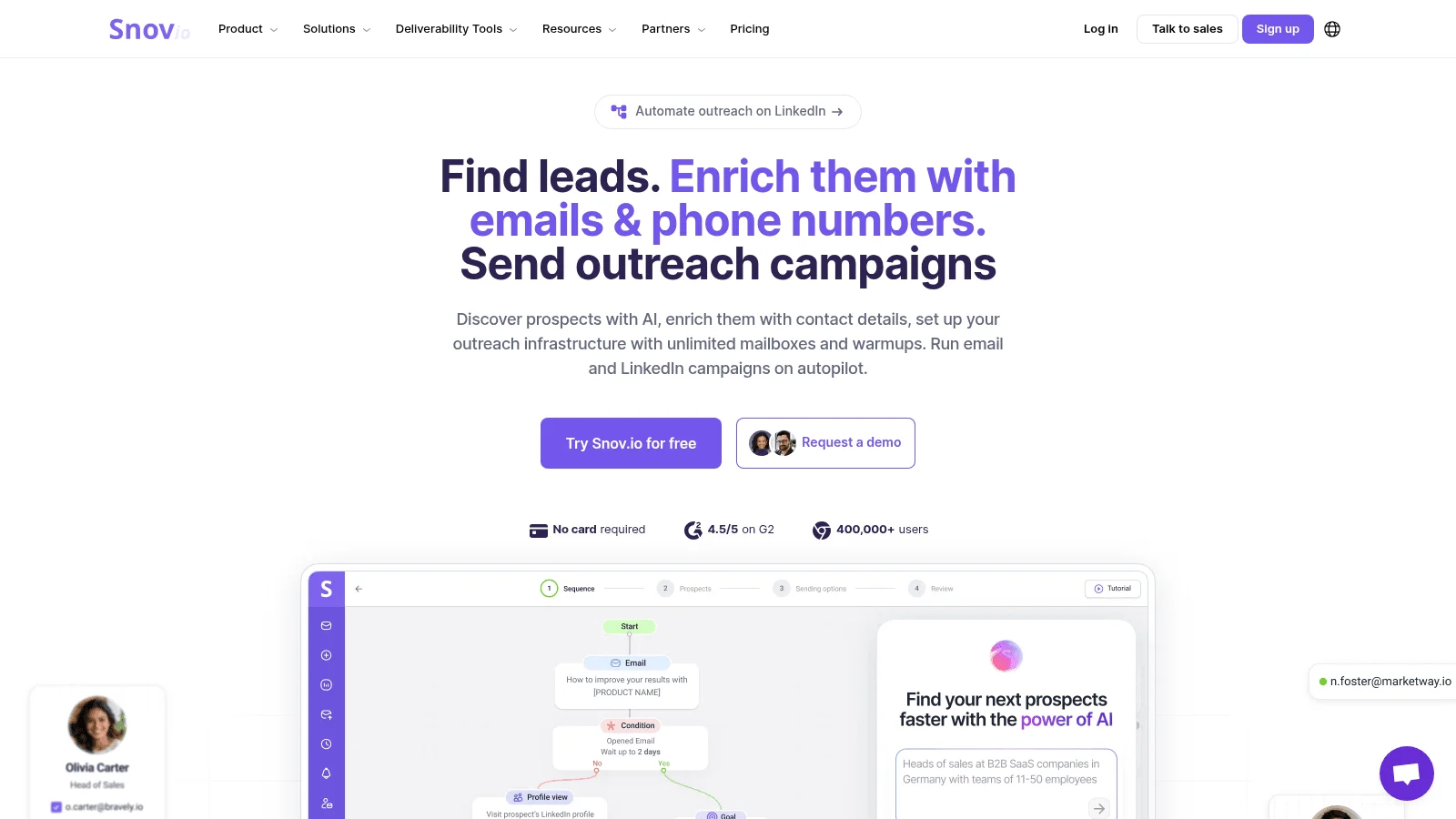
Overview: Snov.io pairs an email finder with outreach tools and unlimited team seats. Its email finder FAQ claims "over 98% accuracy," with no test details beside it.
Key features:
- 50 trial credits that renew monthly, without API or export
- API and webhooks from Starter
- 1 credit per verification or prospect
Pricing: Starter is $39 a month on monthly billing for 1,000 credits, and annual billing saves 25%. Phone numbers cost 10 or 22 tokens per number found, by data source, at $0.02 a token.
Pros: Unlimited seats, renewing trial credits, a low entry plan
Cons: No test details behind the 98%, team management starts above Starter, phone cost varies by source
Best use: Small teams that find and send from one tool.
Final verdict: Snov.io is a reasonable all-rounder whose headline number you should test rather than trust.
8. Apollo.io
Best for: Finding and sending from one account
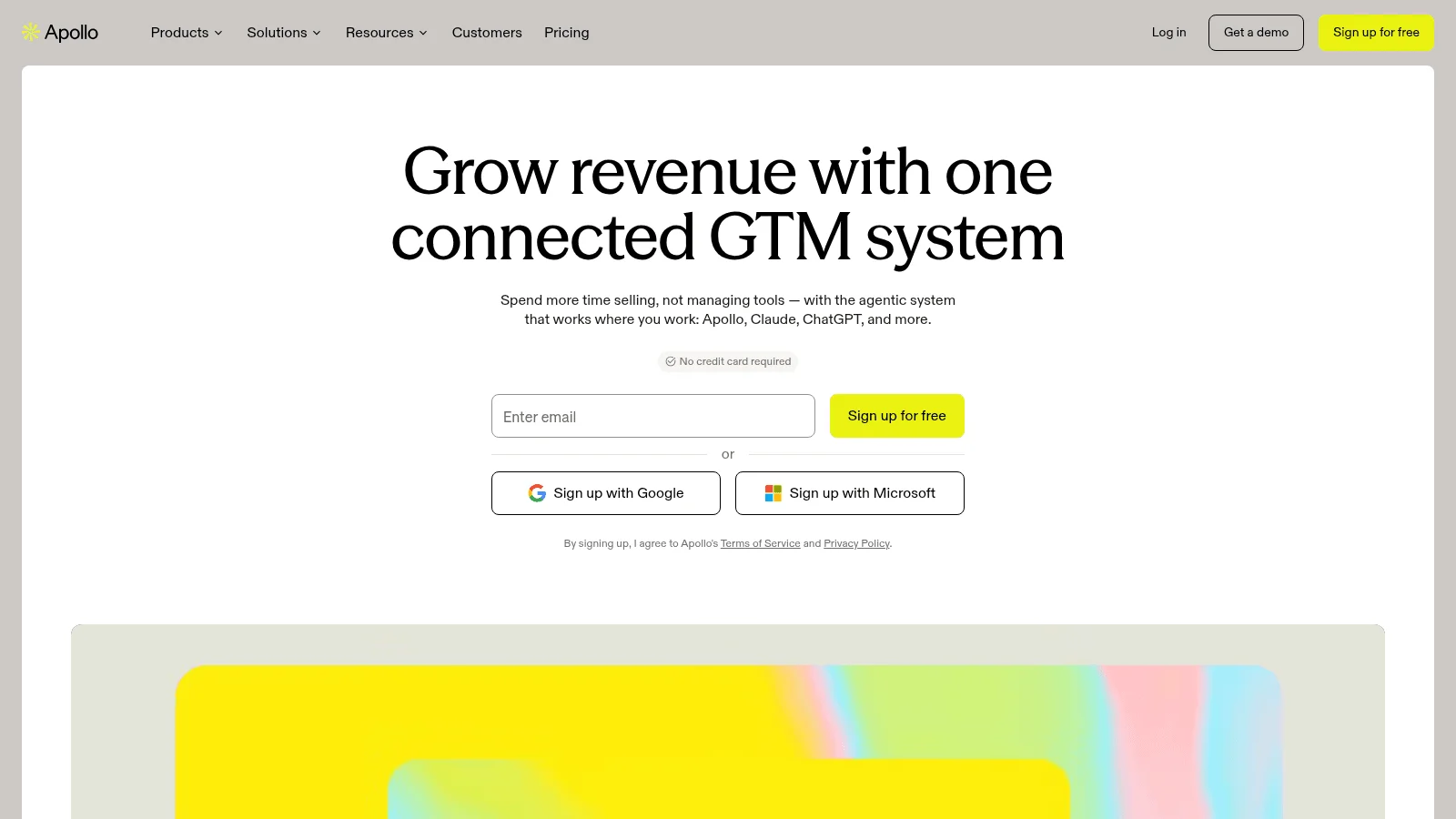
Overview: Apollo.io bundles a database it puts at 240M+ contacts with sequences, a dialer and a CRM. It quotes 98% email accuracy on its data page and 91% on a help page. A second help page gives already-verified emails an 84% "email match rate" without saying what that counts.
Key features:
- Free plan for trying it out first
- A 30-day bounce refund on credits
- API access listed on the free plan, enrichment API on paid plans
Pricing: On the free plan, each seat receives 900 credits over a year, paid out monthly, and an email costs 1 credit while a phone costs 8. Basic is $49 a seat each month on annual billing, and unused credits expire each billing cycle.
Pros: Genuine free plan, bounce refunds, finding and sending in one tool
Cons: Figures that don't agree, expiring credits, a 3-seat minimum on its Organization plan
Who it suits: Small teams wanting an email finder app and a sequencer in one login.
Final verdict: Apollo.io is the value pick if you'll use the whole suite and test which of its numbers holds.
9. Prospeo
Best for: Recurring free credits
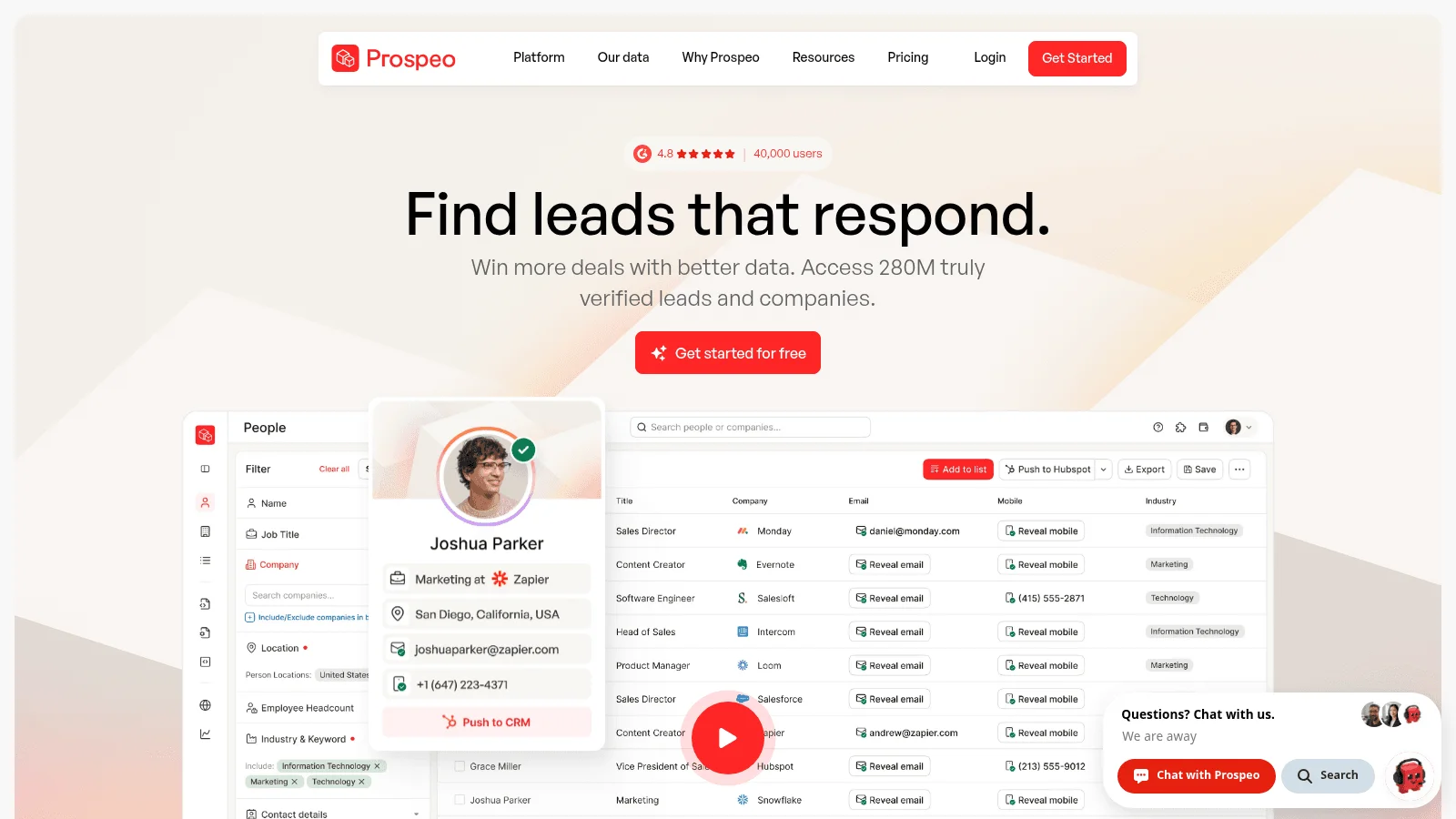
Overview: Prospeo publishes a "98% Accuracy Rate" that covers all data fields, not email finding alone. It prices per user.
Key features:
- 1 credit per verified email, 10 per mobile
- A free plan of 100 credits a month, without API
- Add-ons from 1,000 credits for $10
Pricing: Starter is $49 per user per month, or $37 billed yearly, for 2,000 credits a month. Unused credits don't roll over.
Pros: Recurring free credits, cheap top-ups, a published accuracy figure
Cons: Per-user pricing, no API on free, the 98% covers every field
Why it's here: Its 98% says how often returned data is right, not how often it finds an email.
Final verdict: Prospeo suits a solo user who wants free monthly credits and cheap top-ups.
10. RocketReach
Best for: Emails and phones per seat
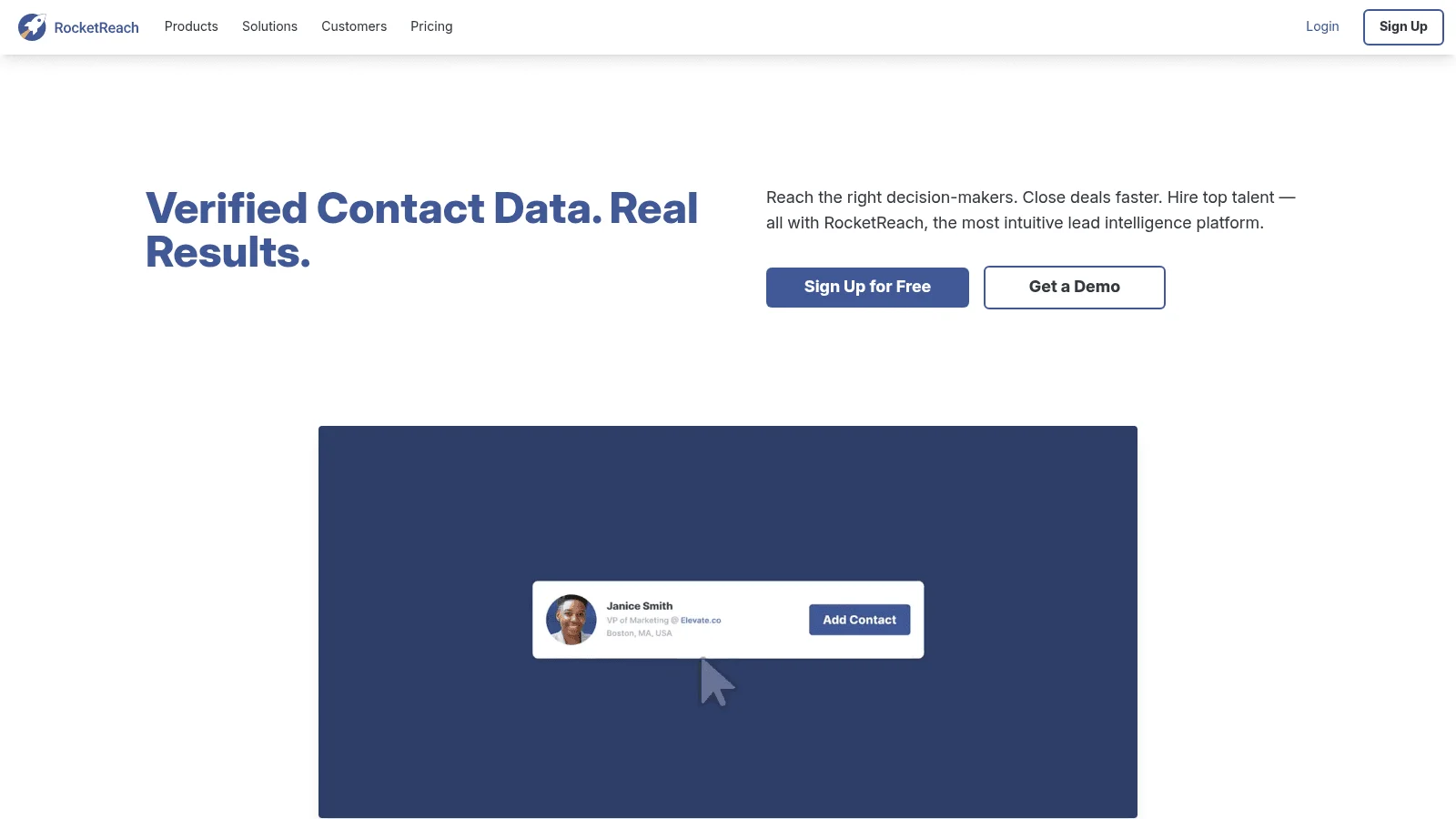
Overview: RocketReach publishes "90-98% deliverability on verified emails" on its homepage and "98% accuracy" on its pricing page. Both describe emails it already verified, not how many people it finds.
Key features:
- Lookups refunded when nothing is found and verified
- API and MCP on every paid tier
- An email-only Essentials plan or an email-plus-phone Pro plan
Pricing: Essentials costs $399 a year, which works out to $33 a month, or $69 if you pay month to month. It's email only; phones need Pro at $75 a month billed annually. Annual plans list "unlimited" lookups but cap Essentials exports at 1,200 a year.
Pros: Refunds empty lookups, API on paid tiers, 5 free lookups
Cons: Per-seat pricing, export caps, phones only on the pricier Pro plan
Who it suits: Recruiters and reps who need a phone number as often as an email, one profile at a time.
Final verdict: RocketReach fits per-seat users who value phones more than big-file runs.
11. Hunter.io
Best for: Free, low-volume finding with per-email confidence scores
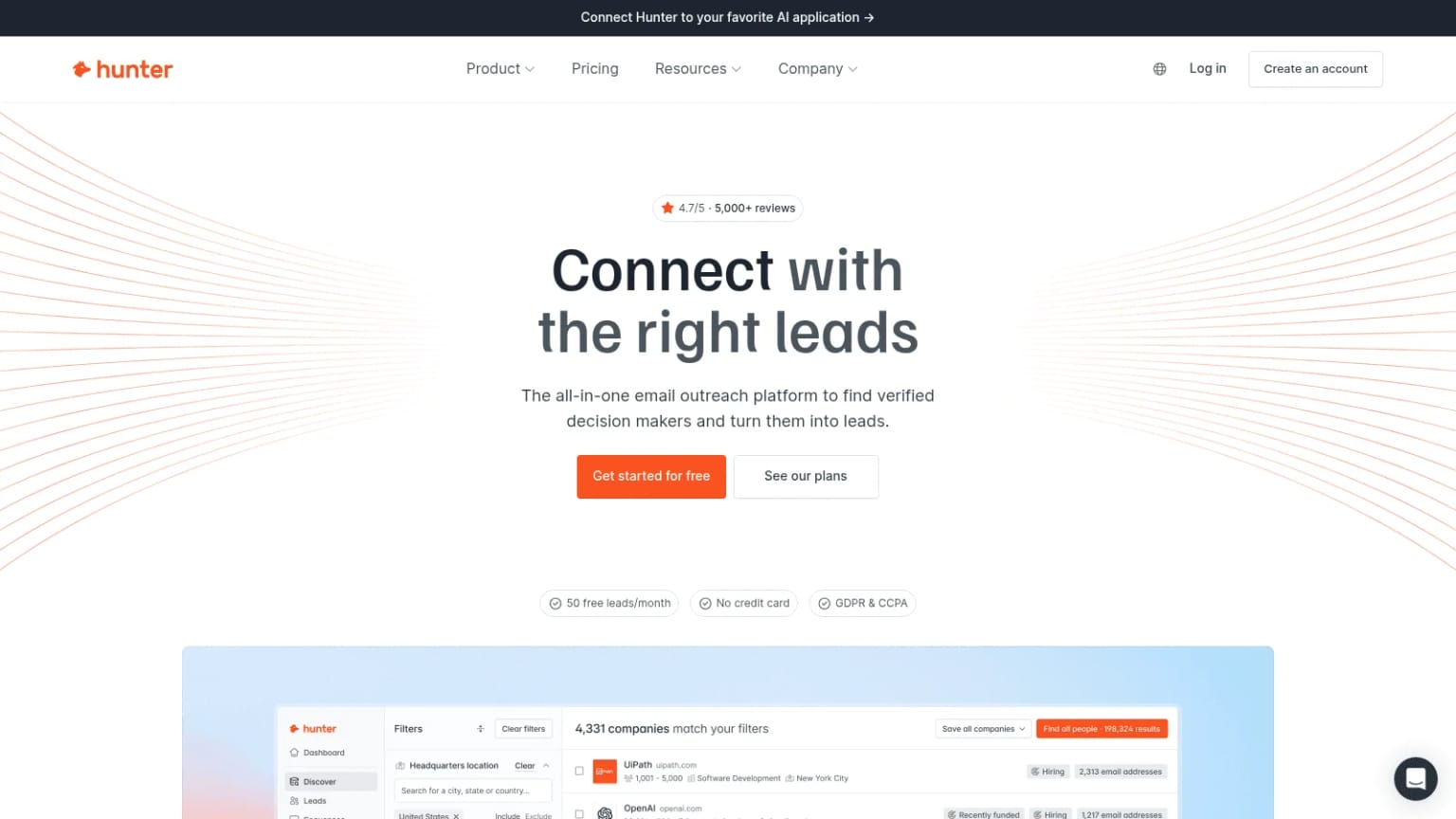
Overview: Hunter.io publishes no match or accuracy rate for finding; its verifier FAQ claims a bounce rate under 1% on addresses it marks valid. Each email gets its own confidence score, so you judge addresses individually.
Key features:
- 50 free credits a month, with API and MCP
- Bulk tasks that find or verify a whole file
- No charge when nothing is found
Pricing: Starter is $49 monthly, or $34 a month billed yearly ($408 a year), for 2,000 credits. Unlimited users share them.
Pros: API on the free plan, per-email confidence scores, shared credits
Cons: No published find rate, email only, no rollover on monthly billing
Watch out for: On monthly billing, unused credits reset each month, so a slow month wastes the plan, and that's the most common reason teams look at Hunter alternatives.
Final verdict: Hunter.io is the easy free starting point, with no find rate to hold it to.
Find Rate, Accuracy and Bounce Rate Are Different Numbers
Three numbers matter most on email finder software pages.
A find rate (also called match rate or coverage) is the share of the contacts you submit that come back with an email. An accuracy rate is the share of returned emails that are actually valid. A bounce rate is the share of emails you send that come back undelivered.
The first two pull against each other. A finder that guesses more often finds more emails, and more of its guesses are wrong. A cautious finder returns fewer addresses, and almost all of them land.
One user on Reddit ran the same list through eight finders and saw exactly that: one tool found 80% of emails with a 15% bounce rate, while another found 45% with almost no bounces. That's one person's experience on one list, not a study.
Why the Bounce Side Can Cost You More
Take that anecdote at 1,000 contacts. The first tool delivers more mail, 680 to roughly 450, but if its 120 bounces are hard bounces, that 15% hard-bounce rate would be past both of Amazon's lines.
Amazon's SES reputation documentation says to keep your bounce rate below 5%. At 5% or higher an account is automatically placed under review, and at 10% or higher Amazon may pause its ability to send.
Why One Number Won't Hold Across Your List
A find rate also depends on who's on your list. A vendor's contact database can be deep on US software companies and thin on mid-sized German manufacturers, so the same tool scores differently on two lists.
Tools that query several data vendors in a set order (a "waterfall") handle this by changing the order per market. The founder of a B2B contact-data platform put it simply on a call with us: "the waterfalls are optimized based on region." If your list spans regions, test each region separately.
What Each Published Number Measures
Side by side, the figures these 11 email finder tools publish measure at least five different things.
| Vendor | Figure (verbatim) | What it measures | Refund on bounce? |
|---|---|---|---|
| Reverse Contact | "93%" match rate "on tested market data" | Find rate | None published; nothing charged when no verified email is found |
| Anymail Finder | "86.4% verified coverage at 98.9% accuracy"; "97%+ delivery guarantee" | Find rate and accuracy (own benchmark) | Yes, credits refunded |
| FullEnrich | "80%+ find rate" | Find rate | None stated with the figure |
| Icypeas | "79%"; "lowest bounce rate (1.33%)" | Find rate and bounce rate (own 300-prospect test) | None stated with the figure |
| Findymail | "Guaranteed <5% bounce rate" | Bounce guarantee | Yes, above 5% |
| ContactOut | "99% Accuracy"; "75% of people online" | Accuracy/confidence claim and a reach claim with no list behind it | None stated with the figure |
| Snov.io | "over 98% accuracy" | Accuracy, no test details | None stated with the figure |
| Apollo.io | "98% email accuracy rate"; 84% "email match rate" | Accuracy (data page) and an undefined rate for verified emails (help center) | Yes, within 30 days |
| Prospeo | "98% Accuracy Rate" | Accuracy across all data fields | None stated with the figure |
| RocketReach | "90-98% deliverability on verified emails" | Deliverability of emails it verified | Empty lookups refunded, not bounces |
| Hunter.io | None for finding; bounce "lower than 1%" on valid addresses | Confidence score per email, plus a verifier bounce claim | None stated |
Two vendors in this list publish head-to-head tests: Anymail Finder (14 tools, 5,000 B2B contacts, June 2026) and Icypeas (300 prospects). Anymail Finder's is the larger, and it names Anymail Finder the top single-source finder, so read it as a competitor's study. Reverse Contact wasn't part of it.
Anymail Finder measured Snov.io at 75.3% accuracy, against Snov's "over 98%." Icypeas came out at 49.0% coverage but the highest accuracy in the test (99.1%), against Icypeas's own 79%.
FullEnrich went the other way, at 87.1%. Part of each gap is definition: Anymail Finder counts only emails its verifier panel judged deliverable, while Icypeas's 79% counts every address returned.
None of that proves a vendor figure false: contacts, markets and definitions of "valid" all differ.
Free and Bulk Email Finder Options
Most of these tools let you try before paying, and several run a whole file at once.
The Best Free Email Finder Tool for Your Volume
Free allowances differ most in whether they renew.
| Vendor | Free allowance | Renews? |
|---|---|---|
| Hunter.io | 50 credits a month, API included | Monthly |
| Apollo.io | 900 credits per seat per year | Granted monthly |
| Prospeo | 100 credits a month, no API | Monthly |
| Snov.io | 50 trial credits, no API or export | Monthly |
| ContactOut | 5 emails, 5 phones, 5 exports a day ("limited time only") | Daily |
| Anymail Finder | 100 credits after an uncharged card check | One time |
| FullEnrich | 50 trial credits, no card | One time |
| Icypeas | 50 credits at signup (limited time) | One time |
| RocketReach | 5 lookups, no card | One time |
| Findymail | 10 trial credits, no card | One time |
| Reverse Contact | Free trial credits, no card required (no free plan) | One time |
For steady free use, ContactOut's daily allowance goes furthest while the offer lasts, followed by Prospeo's 100 monthly credits, and Hunter.io's free plan includes API access. On email discovery tools with one-time trials, spend the credits on a known-answer test rather than live prospecting.
Bulk Email Finder Tools for Big Lists
Bulk email finder tools take a file instead of one name at a time. Three here spell out how. Hunter.io runs bulk tasks to find or verify emails across a file. Anymail Finder runs bulk jobs that post results to a webhook, and its credits work across single searches, bulk and the API.
With Reverse Contact, a bulk job is a CSV enrichment upload: you send a file and get it back with the fields you choose.
One user on Reddit pushed 2,000 prospects through a finder, got about 340 emails, and saw roughly 12% of those bounce. That's one anecdote; a 100-contact test would have shown that low find rate first.
How to Check a Finder on Your Own List
Every rate in this article is a vendor's own claim. What counts is the rate you measure on your own contacts, and a known-answer test takes an afternoon:
- Pull 100 contacts from your CRM whose emails were confirmed recently, by a reply or a booked meeting.
- Strip out the emails and keep first name, last name and company domain.
- Run the same file through two or three finders on free or trial credits.
- Count, for each tool, the emails returned, the ones that match your known answer, and the ones that differ.
- Send nothing to the differing addresses until a verifier has checked them.
- Repeat with a slice from your weakest region or industry.
The matches give you a real accuracy rate, and the returned count gives you a real find rate. Expect both to land below the published figures; two kinds of contact drag them down.
Catch-All Domains
A catch-all domain accepts mail for any address, so no verifier can confirm that one specific mailbox exists. Anymail Finder's benchmark notes say catch-all results "cannot be confirmed with certainty by any verifier."
Score catch-all results separately in your test. When you send to them, use small batches and stop if bounces climb toward the 5% line.
Job Changers
The Bureau of Labor Statistics put median employee tenure at 4.1 years in January 2026, and 20.6% of workers had been with their employer for a year or less.
That hurts pattern-based finders most, the ones that guess an address like first.last@company.com and then check it. If your list still shows the old employer, the finder builds an address at a company the person has left. It either bounces or, worse, still exists and reaches no one.
Found emails go stale, so re-check them. The founder of a vertical B2B data platform described the habit to us: "we also then test the emails, every 30 days." If your contacts live in a CRM, a regular CRM data enrichment cycle catches job changers before your sequences do.
Pick the Number That Matches Your Risk
Start from what hurts you most. If you send cold email from your own domain, weigh bounce guarantees and accuracy first, because a review at 5% costs more than a few missing emails. If you're building a product or filling a CRM, judge email finder software on find rate and pay-per-found billing, since you'll run thousands of lookups.
Whichever email finder tools you shortlist, run the 100-contact known-answer test before you buy credits in bulk. To put Reverse Contact through that same test, get a free API key; the trial credits cost nothing and need no card.
FAQ
What are the best email finder tools in 2026?
It depends on the number you care about. Four vendors here publish a find rate (Reverse Contact, Anymail Finder, FullEnrich and Icypeas), each measured its own way. For a bounce promise, Findymail guarantees under 5% or refunds your credits.
Is a free email finder tool good enough?
For low volume, yes. The best free email finder tool depends on whether you need API access. Hunter.io gives 50 credits a month with API access, Prospeo 100 credits a month without it, and ContactOut 5 emails a day for a limited time. Past a few hundred emails a month you'll need a paid plan, and email discovery tools at that volume start between about $16 and $49 a month, mostly on yearly billing.
Is there an email finder tool by phone number?
Not reliably. None of the 11 tools here works as an email finder tool by phone number with a published match rate. The reverse direction, finding a phone number from an email address, is a more common enrichment job. Phone lookups cost more, too: 20 credits per lookup that finds a number with us.
What bounce rate should I accept from an email finder?
Stay well under 5%. Amazon SES documentation says an account goes under review automatically at 5% and may have sending paused at 10%. Findymail's guarantee sits at that line, and Anymail Finder's 97%+ delivery promise sits inside it.
Do personal email finder tools work for B2B outreach?
They work, but they're a poor default. ContactOut and FullEnrich both return personal addresses, and FullEnrich charges 3 credits for one against 1 for a work email. Use personal emails for warm contacts, and keep cold B2B outreach in work inboxes.
The data layer behind your GTM engine
Access fresh people and company data through one API and power every enrichment, prospecting, and automation workflow.
- Profiles
- 1B+
- Refreshes / month
- 200M
- Response time (P95)
- 500ms